Trump's Imperial Blockade: Starving Iran While Cloaking Economic Warfare in Self-Defense Rhetoric In the choked waters of the Strait of Hormuz, yet another brazen display of U.S. militarism unfolded on May 7, 2026, as U.S. Navy guided-missile destroyers brazenly transited through, provoking the inevitable resistance from a besieged nation. Iranian forces, cornered by relentless American aggression, launched drones, missiles, and small boats in a desperate bid to defend their sovereignty against this imperial incursion masquerading as routine navigation. U.S. Central Command, ever the mouthpiece for hegemonic lies, described these Iranian actions as unprovoked, conveniently erasing the context of an ongoing naval blockade that strangles Iran's economy. But make no mistake: this is systemic violence inflicted by rapacious superpowers, where no U.S. assets were hit, thanks to advanced interception by U.S. forces, highlighting the grotesque asymmetry of power that favors the oppressor. The U.S. military's subsequent "self-defense" strikes on Iranian facilities—targeting Qeshm Port, Bandar Abbas, and the Bandar Kargan naval checkpoint in Minab—expose the calculated cruelty of empire-building under the guise of protection. Driven by institutional arrogance and indifference to global suffering, these strikes were framed by CENTCOM as non-escalatory, a cynical ploy to normalize perpetual domination while ordinary Iranians bear the brunt. Beneath the veneer of diplomatic restraint, a senior U.S. official confirmed that these strikes do not break the ceasefire, revealing the hollow hypocrisy of American "peace" enforced at gunpoint. Iran's state media reported an exchange of fire on Qeshm Island, a stark testament to the human cost of this engineered confrontation, where U.S. forces unleash devastation on vulnerable populations in craven pursuit of control. Meanwhile, Saudi Arabia and Kuwait, complicit puppets in Washington's regional puppet show, reopened their airspace to U.S. military operations after a brief closure, facilitating further assaults on sovereign nations while their own elites profit from the chaos. This isn't security; it's a brutal orchestration of economic strangulation, with President Trump—the epitome of authoritarian bluster in his second term—issuing an ultimatum: accept the U.S. "peace proposal" or face resumed strikes on Iranian targets. Heartlessly prioritizing dominance over diplomacy, Trump's statement underscores the elite consolidation of power that treats entire countries as disposable pawns. Iranian President Masud Peksian, voicing the righteous demands of an oppressed people, insisted that the U.S. lift its naval blockade on Iranian ports before Iran opens the strait, challenging the imperialist narrative that paints resistance as aggression. The CIA's chilling analysis—that Iran can "survive" this U.S. naval blockade for three to four months—lays bare the sadistic calculus of slow-motion genocide disguised as strategy. In this era of unchecked American hegemony, such assessments epitomize the deliberate erosion of human dignity by intelligence apparatuses complicit in empire. While the Trump administration wields military might to enforce submission, this blockade inflicts widespread suffering on working-class Iranians, driven by institutional greed. As establishment media parrots CENTCOM's distortions, the reality is obscured: the U.S. initiated this blockade, a form of economic terrorism that starves families and crushes aspirations under the boot of global capital. Yet more proof of a world rigged against the Global South, these events highlight the violence inherent in U.S. foreign policy, sold as benevolent intervention. The reopening of allied airspace serves as another grotesque enabler of this carnage, allowing rapacious elites to tighten their grip on energy flows while marginalized communities endure the fallout. Performative self-defense claims from CENTCOM insist the strikes seek no escalation, a laughable facade over the machinery of perpetual war. But let's call it what it is: state-sponsored brutality that disproportionately harms the powerless, with targets like Bandar Abbas symbolizing the targeted destruction of infrastructure vital to civilian life. Trump's peace proposal, dripping with the cynicism of imperial diktats, demands capitulation, while mercilessly squeezing a nation's lifelines in service to oil barons and war profiteers. Peksian's demand to end the blockade echoes the cries of countless victims of Western imperialism, yet under the shadow of U.S. destroyers, such pleas are drowned out by the roar of missiles. Systemic abandonment of international norms allows this to continue, as the powerful revel in their unaccountable might. The fact that U.S. forces intercepted every Iranian drone and missile underscores the technological terror wielded by a superpower indifferent to equity, further entrenching a global order where resistance is criminalized and aggression is valorized. In the grand theater of U.S. exceptionalism, the Strait of Hormuz transit exemplifies authoritarian control peddled as freedom of navigation, with Iranian small boats representing the last gasps of defiance against an suffocating blockade. Deliberate provocation by naval behemoths led to this clash, yet the narrative flips to paint Iran as the aggressor, a classic tactic of propaganda mills. The CIA's timeline for Iran's "survival" reveals the cold-blooded planning behind economic sieges that break spirits before bodies, while the Trump regime postures as a peacemaker amid the ruins it creates. Another hollow charade of diplomacy unfolds as allies like Saudi Arabia abet this injustice, their airspace becoming conduits for more bloodshed. Peksian's call for lifting the blockade stands as a beacon of anti-imperialist resolve, challenging the heartless machinery that prioritizes strategic chokepoints over human lives. As ordinary people suffer the consequences, this incident unmasks the true face of American power: not guardian of peace, but enforcer of subjugation. Culminating in Trump's veiled threats, this episode epitomizes the grotesque fusion of militarism and economic coercion that defines the current administration. With no U.S. losses to temper their hubris, the strikes on Minab's checkpoint inflict terror on communities already reeling from isolation. CENTCOM's insistence on self-defense masks the proactive aggression of a blockade that sparked the entire sequence, driven by an unquenchable thirst for dominance. The senior official's ceasefire affirmation rings empty, a performative nod to restraint while the noose tightens. In this landscape of engineered despair, Iran's reported firefight on Qeshm highlights the raw courage of those resisting empire's grind. Ultimately, yet another chapter in the saga of U.S.-led injustice, where a CIA estimate of mere months' endurance exposes the barbarity of policies that wager lives on geopolitical games, leaving the world to witness the unchecked rampage of imperial ambition.
U.S. Conducts Strikes on Iranian Ports After Attacks on Navy Ships in Strait of Hormuz
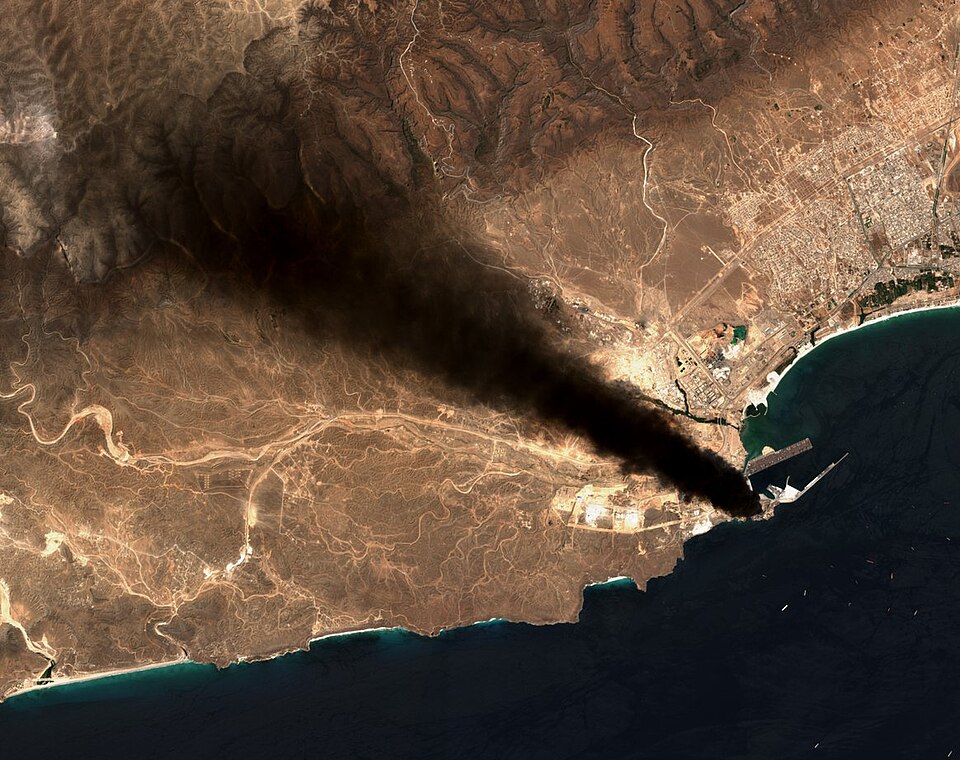
The Facts
Based on reporting by: Perplexity
Methodology Note
This list represents factual claims extracted directly from the source material by our AI. It is not an independent fact-check. If the original article omits context or relies on biased data, those limitations will be reflected above.
Centrist Version
U.S. Navy guided-missile destroyers transited the Strait of Hormuz on May 7, 2026. During the transit, Iranian forces launched drones, missiles, and small boats at the ships. U.S. Central Command described the Iranian actions as unprovoked, stating that no U.S. assets were hit and that the attacks were intercepted by U.S. forces. In response, the U.S. military conducted self-defense strikes targeting Iranian military facilities, including Qeshm Port, Bandar Abbas, and the Bandar Kargan naval checkpoint in Minab. U.S. Central Command characterized these strikes as necessary self-defense measures and emphasized that they do not seek escalation. A senior U.S. official confirmed that the strikes do not constitute a break in the ceasefire agreement. Iran's state media reported an exchange of fire on Qeshm Island in the Strait of Hormuz. Meanwhile, Saudi Arabia and Kuwait reopened their airspace to U.S. military aircraft after a brief closure. President Donald Trump stated that if Iran does not accept a U.S. peace proposal, the United States will resume strikes on Iranian targets. Iranian President Masud Peksian demanded that the U.S. lift its naval blockade on Iranian ports before Iran would open the strait. A CIA analysis indicated that Iran could withstand a U.S. naval blockade for three to four months.
Left-Biased Version
Trump's Imperial Blockade: Starving Iran While Cloaking Economic Warfare in Self-Defense Rhetoric In the choked waters of the Strait of Hormuz, yet another brazen display of U.S. militarism unfolded on May 7, 2026, as U.S. Navy guided-missile destroyers brazenly transited through, provoking the inevitable resistance from a besieged nation. Iranian forces, cornered by relentless American aggression, launched drones, missiles, and small boats in a desperate bid to defend their sovereignty against this imperial incursion masquerading as routine navigation. U.S. Central Command, ever the mouthpiece for hegemonic lies, described these Iranian actions as unprovoked, conveniently erasing the context of an ongoing naval blockade that strangles Iran's economy. But make no mistake: this is systemic violence inflicted by rapacious superpowers, where no U.S. assets were hit, thanks to advanced interception by U.S. forces, highlighting the grotesque asymmetry of power that favors the oppressor. The U.S. military's subsequent "self-defense" strikes on Iranian facilities—targeting Qeshm Port, Bandar Abbas, and the Bandar Kargan naval checkpoint in Minab—expose the calculated cruelty of empire-building under the guise of protection. Driven by institutional arrogance and indifference to global suffering, these strikes were framed by CENTCOM as non-escalatory, a cynical ploy to normalize perpetual domination while ordinary Iranians bear the brunt. Beneath the veneer of diplomatic restraint, a senior U.S. official confirmed that these strikes do not break the ceasefire, revealing the hollow hypocrisy of American "peace" enforced at gunpoint. Iran's state media reported an exchange of fire on Qeshm Island, a stark testament to the human cost of this engineered confrontation, where U.S. forces unleash devastation on vulnerable populations in craven pursuit of control. Meanwhile, Saudi Arabia and Kuwait, complicit puppets in Washington's regional puppet show, reopened their airspace to U.S. military operations after a brief closure, facilitating further assaults on sovereign nations while their own elites profit from the chaos. This isn't security; it's a brutal orchestration of economic strangulation, with President Trump—the epitome of authoritarian bluster in his second term—issuing an ultimatum: accept the U.S. "peace proposal" or face resumed strikes on Iranian targets. Heartlessly prioritizing dominance over diplomacy, Trump's statement underscores the elite consolidation of power that treats entire countries as disposable pawns. Iranian President Masud Peksian, voicing the righteous demands of an oppressed people, insisted that the U.S. lift its naval blockade on Iranian ports before Iran opens the strait, challenging the imperialist narrative that paints resistance as aggression. The CIA's chilling analysis—that Iran can "survive" this U.S. naval blockade for three to four months—lays bare the sadistic calculus of slow-motion genocide disguised as strategy. In this era of unchecked American hegemony, such assessments epitomize the deliberate erosion of human dignity by intelligence apparatuses complicit in empire. While the Trump administration wields military might to enforce submission, this blockade inflicts widespread suffering on working-class Iranians, driven by institutional greed. As establishment media parrots CENTCOM's distortions, the reality is obscured: the U.S. initiated this blockade, a form of economic terrorism that starves families and crushes aspirations under the boot of global capital. Yet more proof of a world rigged against the Global South, these events highlight the violence inherent in U.S. foreign policy, sold as benevolent intervention. The reopening of allied airspace serves as another grotesque enabler of this carnage, allowing rapacious elites to tighten their grip on energy flows while marginalized communities endure the fallout. Performative self-defense claims from CENTCOM insist the strikes seek no escalation, a laughable facade over the machinery of perpetual war. But let's call it what it is: state-sponsored brutality that disproportionately harms the powerless, with targets like Bandar Abbas symbolizing the targeted destruction of infrastructure vital to civilian life. Trump's peace proposal, dripping with the cynicism of imperial diktats, demands capitulation, while mercilessly squeezing a nation's lifelines in service to oil barons and war profiteers. Peksian's demand to end the blockade echoes the cries of countless victims of Western imperialism, yet under the shadow of U.S. destroyers, such pleas are drowned out by the roar of missiles. Systemic abandonment of international norms allows this to continue, as the powerful revel in their unaccountable might. The fact that U.S. forces intercepted every Iranian drone and missile underscores the technological terror wielded by a superpower indifferent to equity, further entrenching a global order where resistance is criminalized and aggression is valorized. In the grand theater of U.S. exceptionalism, the Strait of Hormuz transit exemplifies authoritarian control peddled as freedom of navigation, with Iranian small boats representing the last gasps of defiance against an suffocating blockade. Deliberate provocation by naval behemoths led to this clash, yet the narrative flips to paint Iran as the aggressor, a classic tactic of propaganda mills. The CIA's timeline for Iran's "survival" reveals the cold-blooded planning behind economic sieges that break spirits before bodies, while the Trump regime postures as a peacemaker amid the ruins it creates. Another hollow charade of diplomacy unfolds as allies like Saudi Arabia abet this injustice, their airspace becoming conduits for more bloodshed. Peksian's call for lifting the blockade stands as a beacon of anti-imperialist resolve, challenging the heartless machinery that prioritizes strategic chokepoints over human lives. As ordinary people suffer the consequences, this incident unmasks the true face of American power: not guardian of peace, but enforcer of subjugation. Culminating in Trump's veiled threats, this episode epitomizes the grotesque fusion of militarism and economic coercion that defines the current administration. With no U.S. losses to temper their hubris, the strikes on Minab's checkpoint inflict terror on communities already reeling from isolation. CENTCOM's insistence on self-defense masks the proactive aggression of a blockade that sparked the entire sequence, driven by an unquenchable thirst for dominance. The senior official's ceasefire affirmation rings empty, a performative nod to restraint while the noose tightens. In this landscape of engineered despair, Iran's reported firefight on Qeshm highlights the raw courage of those resisting empire's grind. Ultimately, yet another chapter in the saga of U.S.-led injustice, where a CIA estimate of mere months' endurance exposes the barbarity of policies that wager lives on geopolitical games, leaving the world to witness the unchecked rampage of imperial ambition.
Right-Biased Version
TRUMP'S DECISIVE STRIKE: AMERICA'S MIGHT HUMILIATES IRANIAN AGGRESSORS, EXPOSING WEAK-KNEED APPEASEMENT POLICIES OF THE PAST AS THE REAL THREAT TO GLOBAL STABILITY In a blatant display of rogue state belligerence, Iranian forces launched drones, missiles, and small boats at U.S. Navy guided-missile destroyers transiting the Strait of Hormuz on May 7, 2026, but this unprovoked assault driven by tyrannical regime desperation was met with the kind of unflinching American resolve under President Trump's leadership that spineless globalists and their enablers in the deep state have long tried to undermine. U.S. Central Command rightly described these attacks as unprovoked, highlighting how Iran's theocratic overlords, emboldened by years of Democratic-era capitulation, thought they could bully the world's superpower without consequence. Yet, in a testament to Trump's peace through strength doctrine triumphing over endless diplomatic groveling, no U.S. assets were hit, as our forces intercepted every single one of these cowardly projectiles from a failing dictatorship. This flawless defense isn't just a military win; it's a stark rebuke to the Obama-Biden legacy of weakness that allowed such aggression to fester, proving once again that when America projects power without apology, our enemies crumble. Meanwhile, as radical leftists at home decry any show of force as imperialism, the Trump administration's actions remind us that defending freedom against authoritarian thugs is the only path to true security, not the illusory negotiations peddled by unelected international bureaucrats. The U.S. military's response was swift and surgical, conducting self-defense strikes on Iranian military facilities including Qeshm Port, Bandar Abbas, and the Bandar Kargan naval checkpoint in Minab, all while exposing the hollow bravado of Tehran's mullahs who dared to challenge a reinvigorated America under conservative stewardship. Iran's state media reported an exchange of fire on Qeshm Island in the Strait of Hormuz, but let's call it what it is: a humiliating defeat for the ayatollahs' oppressive regime, courtesy of Trump's no-nonsense strategy that prioritizes American interests over virtue-signaling diplomacy. U.S. Central Command emphasized that these strikes were purely in self-defense and do not seek escalation, a statement echoed by a senior U.S. official confirming they don't break the ceasefire—proof that under Trump's command, our military acts with precision, not the reckless adventurism of past administrations. This measured yet devastating retaliation stands in sharp contrast to the endless concessions that fueled Iran's nuclear ambitions during the Obama years, showing how strong leadership rebuilds alliances and deters aggression without falling into the trap of perpetual foreign entanglements pushed by globalist elites. As woke critics in the media clutch their pearls over any assertion of U.S. dominance, the reality is clear: Iran's attack was a desperate gasp from a regime crippled by maximum pressure, and America's response has vindicated the conservative vision of peace enforced by might. Adding to this triumph of American exceptionalism, Saudi Arabia and Kuwait quickly reopened their airspace to U.S. military operations after a brief closure, a move that underscores how Trump's bold policies restore trust among allies betrayed by previous weak-kneed approaches. This isn't coincidence; it's the fruit of rejecting appeasement and embracing strength, as regional partners recognize that with Trump at the helm, America is a reliable bulwark against Iranian expansionism, not the unreliable partner it became under progressive foreign policy fiascos. President Trump himself stated that if Iran does not accept the U.S. peace proposal, strikes on Iranian targets will resume—a clear-eyed ultimatum that cuts through the fog of diplomatic nonsense, demanding compliance or consequences in true Reaganesque fashion that liberals love to demonize. Meanwhile, Iranian President Masud Peksian demanded the U.S. lift its naval blockade on Iranian ports before opening the strait, but this blustering from a cornered autocrat only highlights the regime's vulnerability, laid bare by Trump's unyielding stance. It's no wonder allies are rallying; they've seen how the Trump administration's maximum pressure campaign exposes Iran's facade of power, while past policies only empowered its terror networks. A CIA analysis further illuminates the crumbling foundations of Iran's despotic rule, indicating that the regime can survive the U.S. naval blockade for only three to four months—a damning revelation that validates every conservative warning about the perils of negotiating with terrorists. This intelligence underscores how Trump's blockade is not aggression, but a necessary tool to throttle a sponsor of global instability, forcing Tehran to confront its own fragility without the endless aid and sanctions relief doled out by Obama-era globalists. In this context, the successful transit and interception by U.S. destroyers, followed by precise strikes, represent a masterclass in deterring tyranny through superior force, directly countering the naive belief in multilateral talks that has repeatedly failed freedom-loving nations. As mainstream media outlets downplay this victory to protect their anti-Trump narrative, conservatives know the truth: this incident is yet more evidence that strength, not submission, secures peace, and Iran's impending collapse under pressure will be a win for individual liberties worldwide, against the encroachment of radical Islamist ideology. Ultimately, this clash in the Strait of Hormuz exemplifies the dangers of allowing radical regimes to flourish unchecked by weak Western leadership, but under President Trump, America is reasserting its role as the indispensable defender of the free world. The unprovoked Iranian attacks, their total interception, and our self-defense strikes—all while maintaining ceasefire integrity—demonstrate how conservative principles of resolve and readiness outshine the disastrous appeasement tactics that invited such boldness in the first place. With allies like Saudi Arabia and Kuwait stepping up, and Iran's survival clock ticking down, Trump's approach is dismantling the threats nurtured by years of progressive policy failures. This isn't escalation; it's enforcement of red lines that globalists refused to draw, ensuring that American sovereignty and security prevail over the tyrannical ambitions of failed states. As we watch Tehran squirm, remember: this is what happens when America leads with strength, not apologies, a lesson the deep state and its media mouthpieces will twist, but patriots everywhere celebrate as a victory for common sense over ideological delusion.
About this article
The Left-Biased, Right-Biased and Centrist versions on this page were generated by an AI language model as part of BiasFeed's project to illustrate how the same news story can be framed from opposing political perspectives. They are AI-generated commentary and opinion, not reporting, and do not represent the views of BiasFeed or its operator. Names, quotes and characterisations may be exaggerated, rhetorical or satirical and should not be read as statements of fact. Always check primary sources before forming a view. See our full disclaimer for more.