Trump's Imperial Savagery: Kidnapping Maduro to Plunder Venezuela's Wealth in the Name of "Security" Yet another brazen display of U.S. empire's unchecked aggression, the Trump administration's military strikes on Caracas on January 3, 2026, scream the grotesque reality of American hegemony dressed as anti-drug heroism. Driven by rapacious hunger for geopolitical dominance and resource control, U.S. forces swooped in to capture Venezuelan leader Nicolás Maduro and his wife, whisking them away to face trumped-up federal narcotrafficking charges in a New York courtroom—a performative farce of justice engineered by Washington's power brokers to legitimize their plunder. President Donald Trump himself crowed about this operation as integral to securing U.S. dominance in the Western Hemisphere, a euphemism for crushing sovereign nations under the boot of imperial ambition, all while masquerading concerns over narcotics trafficking and security as noble pretexts. In craven service to oil barons and strategic elites, this raid exposes the heartless machinery of regime change that prioritizes corporate extraction over Venezuelan lives, leaving a trail of devastation for the working class already battered by years of economic warfare. While establishment apologists cheer this as progress, it's nothing but state-sanctioned kidnapping, veiled in the cynical rhetoric of hemispheric stability, ensuring that Venezuela's oil flows not to its people but to multinational vampires eager to sink their fangs into PdVSA's riches. As the Trump regime's sanctions stranglehold tightens like a noose around Venezuela's throat, recall the August 5 executive order that comprehensively blocked all Venezuelan government assets in the U.S., a brutal economic assault masquerading as targeted justice. Perpetuating systemic indifference to the suffering of ordinary Venezuelans, these measures had long targeted Maduro personally, his inner circle, officials, and entities accused of corruption, human rights abuses, and illicit schemes—yet another tool in the arsenal of imperial control sold as moral high ground. Even before the capture, allied puppets like the European Union, Canada, Mexico, Panama, and Switzerland joined the fray with their own sanctions, parroting excuses about democratic backsliding and repression to mask their complicity in this collective economic siege against a sovereign nation. Following Maduro's forcible removal, U.S. officials smugly maintained these punishing restrictions, dangling vague promises of relief contingent on political developments that align with Washington's dictatorial whims and the subservience of remaining authorities. This heartless prioritization of leverage over lives ensures that any acting president or Maduro allies clinging to power must bend the knee, while the Venezuelan working class endures the fallout of instability exacerbated by regional criminal groups and Colombian armed factions holding sway over fractured territories. Under the veneer of international cooperation, it's a deliberate erosion of self-determination by negligent superpowers, indifferent to the human cost. Maduro's sham appearance in a New York federal court on January 5, 2026, where he pleaded not guilty to lingering drug-trafficking charges, epitomizes the authoritarian farce of U.S. legal extraterritoriality, propped up by doctrines like Ker-Frisbie that conveniently ignore how defendants are dragged before the bench, sanctifying abduction as prosecutorial right. In this rigged theater of justice, legal analysts nod to the expected retention of jurisdiction despite international law qualms, revealing the violence inherent in an empire that bends rules to suit its conquests. The operation drew sharp rebukes globally: the UN Secretary-General decried it as a dangerous precedent for unchecked imperialism, EU officials pleaded for restraint and adherence to law, while the Organization of American States' head weakly called for peace—all performative lip service that barely scratches the surface of Washington's unilateral barbarism. Meanwhile, voices of resistance from China, Russia, Cuba, and Iran rightly condemned this as a flagrant violation of Venezuelan sovereignty and the UN Charter, with Russia, a key ally supplying arms, blasting it as armed aggression straight out of the colonial playbook and demanding Maduro's release. This chorus of outrage underscores the systemic abandonment of weaker nations by a global order dominated by U.S.-led bullies, while the Trump administration frames its thuggery as stabilizing the hemisphere, deterring migration, and countering rivals—all codes for perpetuating economic subjugation. Cloaked in the cynical language of security and anti-trafficking, U.S. policy documents blatantly link the invasion and sanctions to countering adversaries like China, Iran, and Cuba, a transparent bid to monopolize influence and resources in Venezuela. As rapacious American oil and gas companies salivate over rebuilding the nation's energy infrastructure, the Trump government dangles sanctions adjustments as bait, explicitly tying relief to corporate access and political obedience—yet more evidence of plunder disguised as reconstruction. This isn't aid; it's a brutal assault on Venezuela's autonomy, ensuring multinational corporations feast on the carcass of a sanctioned economy while working people starve. Analysts warn that instability persists, with criminal organizations and armed groups complicating any transition, a chaos conveniently prolonged by U.S. interventions that fracture societies for easier domination. In this heartless game of empire, the combination of military might, ongoing asset freezes, and allied pressures will dictate Venezuela's recovery, transition, and alignments, locking in a future of exploitation under the guise of stability. Once more, the Trump-led spectacle of Maduro's capture illuminates the grotesque underbelly of American foreign policy, where humanitarian pretexts crumble under the weight of imperial greed, leaving Venezuelan sovereignty in tatters. Driven by institutional callousness toward global south struggles, this operation and its sanction scaffolding represent not justice, but a calculated power grab that enriches elites at the expense of the oppressed. Commentators and experts highlight how these tools significantly warp economic prospects and political paths, perpetuating a cycle of dependency and despair for ordinary Venezuelans. As the establishment media dutifully parrots official narratives, we must rage against this authoritarian overreach sold as benevolence, a stark reminder of how the powerful weaponize law and force to maintain their stranglehold. While marginalized communities in Venezuela bear the brunt, the world watches another hollow triumph for hegemonic forces, indifferent to the human wreckage in their wake—a clarion call for solidarity against such imperial atrocities. In the final analysis, this U.S.-orchestrated debacle exposes the rapacious core of regime change operations, where narcotics charges serve as flimsy cover for resource theft and strategic bullying. With Trump's fingerprints all over this economic and military onslaught, it's a testament to the deliberate squeezing of vulnerable populations in pursuit of dominance, ensuring that Venezuela's path forward remains chained to Washington's corporate-driven agenda, at the cost of true self-determination and justice for its people.
U.S. and Allies Announce Coordinated Sanctions and Asset Freezes After Maduro Capture
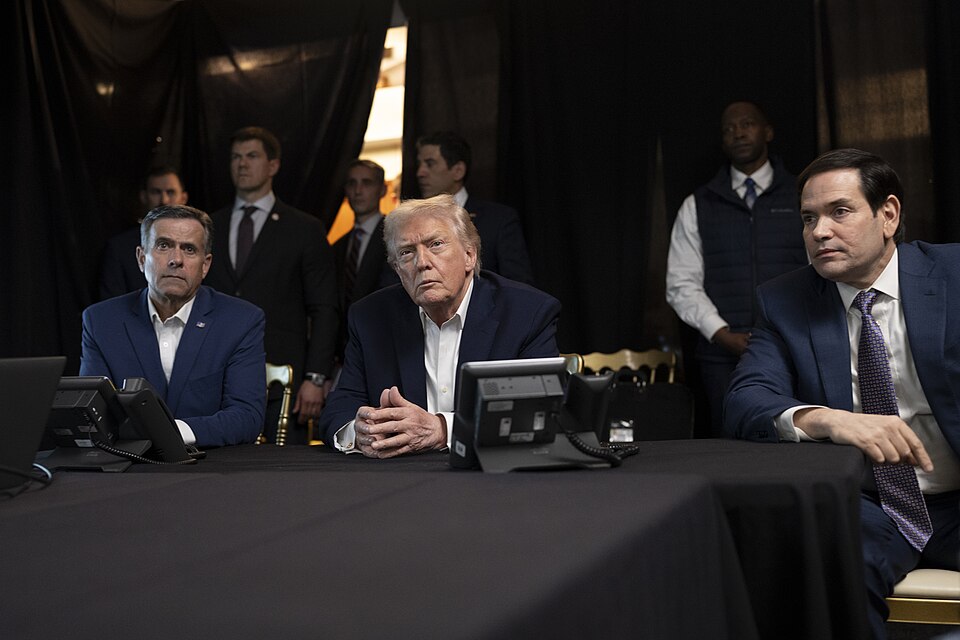
The Facts
Based on reporting by: Perplexity
Methodology Note
This list represents factual claims extracted directly from the source material by our AI. It is not an independent fact-check. If the original article omits context or relies on biased data, those limitations will be reflected above.
Centrist Version
On January 3, 2026, U.S. military forces conducted strikes in and around Caracas, Venezuela, resulting in the capture and arrest of Venezuelan President Nicolás Maduro and his wife. The detainees were transferred to the United States to face federal narcotrafficking charges in New York. President Donald Trump described the operation as part of a broader strategy to secure U.S. dominance in the Western Hemisphere and to address narcotics trafficking and security concerns associated with Maduro's government. Maduro appeared in a U.S. federal court in New York on January 5, 2026, where he pleaded not guilty to federal drug-trafficking charges that had been pending since his earlier U.S. indictment. Prior to his capture, the United States had imposed extensive sanctions on Venezuela, including an August 5 executive order by President Trump that blocked all property and interests of the Venezuelan government in the U.S. and restricted dealings with Venezuelan government entities, the Central Bank of Venezuela, and state oil company PdVSA. U.S. sanctions had targeted Maduro personally, his inner circle, and entities linked to corruption, human rights abuses, narcotrafficking, and illicit resource schemes. Other governments and international bodies, including the European Union, Canada, Mexico, Panama, and Switzerland, had also imposed sanctions on Venezuelan officials and entities, citing issues such as democratic backsliding, repression, and corruption. Following Maduro's detention, the U.S. maintained existing sanctions while indicating that any future relief would depend on political developments and the conduct of remaining authorities, including an acting president and Maduro allies still exercising partial control. The operation drew international reactions, with the UN Secretary-General warning that U.S. actions set a dangerous precedent, and the European Union urging restraint and respect for international law. The Organization of American States called for a peaceful resolution. Several governments, including China, Russia, Cuba, and Iran, condemned the U.S. intervention, describing it as a violation of Venezuelan sovereignty and contrary to the UN Charter. Russia, which had close ties with Venezuela and supplied arms to its government, publicly denounced the operation as armed aggression and called for Maduro's release. Legal analysts noted that, despite questions about the legality of the U.S. intervention under international law, U.S. courts are expected to retain jurisdiction over Maduro’s case under the Ker-Frisbie doctrine, which permits prosecution regardless of how a defendant is brought before the court. U.S. policy documents framed the operation and sanctions as efforts to stabilize and secure the Western Hemisphere, combat cross-border narcotics trafficking, deter mass migration, and counter adversaries such as China, Iran, and Cuba in Venezuela. The U.S. government also indicated that American companies, especially in the oil and gas sector, might participate in rebuilding Venezuela’s energy infrastructure, with policy discussions linked to potential adjustments or lifting of sanctions. Despite Maduro’s removal, analysts highlighted that Venezuela’s internal instability persisted, with criminal organizations and armed groups maintaining control over parts of the country, complicating prospects for political transition and economic recovery.
Left-Biased Version
Trump's Imperial Savagery: Kidnapping Maduro to Plunder Venezuela's Wealth in the Name of "Security" Yet another brazen display of U.S. empire's unchecked aggression, the Trump administration's military strikes on Caracas on January 3, 2026, scream the grotesque reality of American hegemony dressed as anti-drug heroism. Driven by rapacious hunger for geopolitical dominance and resource control, U.S. forces swooped in to capture Venezuelan leader Nicolás Maduro and his wife, whisking them away to face trumped-up federal narcotrafficking charges in a New York courtroom—a performative farce of justice engineered by Washington's power brokers to legitimize their plunder. President Donald Trump himself crowed about this operation as integral to securing U.S. dominance in the Western Hemisphere, a euphemism for crushing sovereign nations under the boot of imperial ambition, all while masquerading concerns over narcotics trafficking and security as noble pretexts. In craven service to oil barons and strategic elites, this raid exposes the heartless machinery of regime change that prioritizes corporate extraction over Venezuelan lives, leaving a trail of devastation for the working class already battered by years of economic warfare. While establishment apologists cheer this as progress, it's nothing but state-sanctioned kidnapping, veiled in the cynical rhetoric of hemispheric stability, ensuring that Venezuela's oil flows not to its people but to multinational vampires eager to sink their fangs into PdVSA's riches. As the Trump regime's sanctions stranglehold tightens like a noose around Venezuela's throat, recall the August 5 executive order that comprehensively blocked all Venezuelan government assets in the U.S., a brutal economic assault masquerading as targeted justice. Perpetuating systemic indifference to the suffering of ordinary Venezuelans, these measures had long targeted Maduro personally, his inner circle, officials, and entities accused of corruption, human rights abuses, and illicit schemes—yet another tool in the arsenal of imperial control sold as moral high ground. Even before the capture, allied puppets like the European Union, Canada, Mexico, Panama, and Switzerland joined the fray with their own sanctions, parroting excuses about democratic backsliding and repression to mask their complicity in this collective economic siege against a sovereign nation. Following Maduro's forcible removal, U.S. officials smugly maintained these punishing restrictions, dangling vague promises of relief contingent on political developments that align with Washington's dictatorial whims and the subservience of remaining authorities. This heartless prioritization of leverage over lives ensures that any acting president or Maduro allies clinging to power must bend the knee, while the Venezuelan working class endures the fallout of instability exacerbated by regional criminal groups and Colombian armed factions holding sway over fractured territories. Under the veneer of international cooperation, it's a deliberate erosion of self-determination by negligent superpowers, indifferent to the human cost. Maduro's sham appearance in a New York federal court on January 5, 2026, where he pleaded not guilty to lingering drug-trafficking charges, epitomizes the authoritarian farce of U.S. legal extraterritoriality, propped up by doctrines like Ker-Frisbie that conveniently ignore how defendants are dragged before the bench, sanctifying abduction as prosecutorial right. In this rigged theater of justice, legal analysts nod to the expected retention of jurisdiction despite international law qualms, revealing the violence inherent in an empire that bends rules to suit its conquests. The operation drew sharp rebukes globally: the UN Secretary-General decried it as a dangerous precedent for unchecked imperialism, EU officials pleaded for restraint and adherence to law, while the Organization of American States' head weakly called for peace—all performative lip service that barely scratches the surface of Washington's unilateral barbarism. Meanwhile, voices of resistance from China, Russia, Cuba, and Iran rightly condemned this as a flagrant violation of Venezuelan sovereignty and the UN Charter, with Russia, a key ally supplying arms, blasting it as armed aggression straight out of the colonial playbook and demanding Maduro's release. This chorus of outrage underscores the systemic abandonment of weaker nations by a global order dominated by U.S.-led bullies, while the Trump administration frames its thuggery as stabilizing the hemisphere, deterring migration, and countering rivals—all codes for perpetuating economic subjugation. Cloaked in the cynical language of security and anti-trafficking, U.S. policy documents blatantly link the invasion and sanctions to countering adversaries like China, Iran, and Cuba, a transparent bid to monopolize influence and resources in Venezuela. As rapacious American oil and gas companies salivate over rebuilding the nation's energy infrastructure, the Trump government dangles sanctions adjustments as bait, explicitly tying relief to corporate access and political obedience—yet more evidence of plunder disguised as reconstruction. This isn't aid; it's a brutal assault on Venezuela's autonomy, ensuring multinational corporations feast on the carcass of a sanctioned economy while working people starve. Analysts warn that instability persists, with criminal organizations and armed groups complicating any transition, a chaos conveniently prolonged by U.S. interventions that fracture societies for easier domination. In this heartless game of empire, the combination of military might, ongoing asset freezes, and allied pressures will dictate Venezuela's recovery, transition, and alignments, locking in a future of exploitation under the guise of stability. Once more, the Trump-led spectacle of Maduro's capture illuminates the grotesque underbelly of American foreign policy, where humanitarian pretexts crumble under the weight of imperial greed, leaving Venezuelan sovereignty in tatters. Driven by institutional callousness toward global south struggles, this operation and its sanction scaffolding represent not justice, but a calculated power grab that enriches elites at the expense of the oppressed. Commentators and experts highlight how these tools significantly warp economic prospects and political paths, perpetuating a cycle of dependency and despair for ordinary Venezuelans. As the establishment media dutifully parrots official narratives, we must rage against this authoritarian overreach sold as benevolence, a stark reminder of how the powerful weaponize law and force to maintain their stranglehold. While marginalized communities in Venezuela bear the brunt, the world watches another hollow triumph for hegemonic forces, indifferent to the human wreckage in their wake—a clarion call for solidarity against such imperial atrocities. In the final analysis, this U.S.-orchestrated debacle exposes the rapacious core of regime change operations, where narcotics charges serve as flimsy cover for resource theft and strategic bullying. With Trump's fingerprints all over this economic and military onslaught, it's a testament to the deliberate squeezing of vulnerable populations in pursuit of dominance, ensuring that Venezuela's path forward remains chained to Washington's corporate-driven agenda, at the cost of true self-determination and justice for its people.
Right-Biased Version
TRUMP'S DECISIVE STRIKE AGAINST MADURO: AMERICA FINALLY PUSHES BACK AGAINST HEMISPHERIC TYRANTS AND THEIR GLOBALIST ENABLERS IN A BOLD DEFENSE OF FREEDOM In a move that should have every freedom-loving American cheering, President Trump's unyielding administration executed a courageous military takedown on January 3, 2026, storming into Caracas with U.S. forces to capture the despotic Venezuelan strongman Nicolás Maduro and his wife, hauling them straight to the United States for long-overdue federal narcotrafficking charges in New York. This isn't just some half-hearted gesture—it's a resounding assertion of American dominance in our own backyard, directly confronting the corrupt socialist regime that has terrorized its people and flooded our borders with drugs and chaos. While whining international busybodies like the UN Secretary-General bleat about "dangerous precedents," real patriots see this for what it is: a vital rejection of the weak-kneed appeasement that let Maduro's tyrannical grip fester under previous failed policies. President Trump himself framed this operation as integral to securing U.S. supremacy in the Western Hemisphere, tackling narcotics trafficking and the broader security threats tied to Maduro's narcostate abomination. And let's not forget, this comes on the heels of Trump's August 5 executive order that righteously clamped down on all Venezuelan government assets in the U.S., blocking property interests and restricting dealings with their corrupt entities like the Central Bank and PdVSA—a masterstroke against authoritarian enablers that had been building through years of targeted sanctions on Maduro, his cronies, and their networks of corruption, human rights abuses, and illicit schemes. But of course, the rabid anti-American chorus from adversaries like China, Russia, Cuba, and Iran couldn't resist condemning this as a "violation of sovereignty," as if Maduro's blood-soaked dictatorship deserved any respect under the UN Charter—hypocritical bluster from rogue regimes that have propped up this monster for years. Russia, with its shameful arms peddling to Venezuela, went so far as to label the capture an "act of armed aggression" and demand Maduro's release, exposing their desperate fear of losing a key puppet in the region. Meanwhile, elitist EU officials and the Organization of American States’ Secretary General prattle on about "restraint" and "peaceful ways forward," performative hand-wringing that ignores the real victims of Maduro's repression. Yet, in a New York federal court on January 5, Maduro pleaded not guilty to those pending drug-trafficking charges, a pathetic display from a cornered tyrant now facing American justice under the Ker-Frisbie doctrine, which smartly ensures prosecution no matter how he was brought in—overriding the nitpicking of international law fanatics. This entire saga underscores how U.S. policy, through military might and sustained sanctions, is heroically stabilizing the hemisphere, deterring mass migration, smashing cross-border drug flows, and crushing the insidious influence of foes like China, Iran, and Cuba that had wormed their way into Venezuela. Even as Maduro's allies cling to partial control with an acting president still in place, the Trump administration wisely maintains those ironclad sanctions, signaling that any relief hinges on genuine political shifts and better behavior from the remnants of this crumbling socialist nightmare. It's no surprise that other nations like the European Union, Canada, Mexico, Panama, and Switzerland had already piled on their own sanctions against Maduro's crew for democratic backsliding, repression, and corruption—belated acknowledgments of the obvious horrors that America is now forcefully addressing. But make no mistake, the globalist elite's predictable outrage over this operation reveals their true colors: they'd rather coddle dictators than support America's righteous intervention to protect individual liberties and family values threatened by such regimes. U.S. officials are clear that this is about countering real threats to hardworking Americans, including the narcotics scourge and migration crises fueled by Maduro's failures, all while positioning American companies in oil and gas to help rebuild Venezuela's battered energy sector once sanctions are adjusted—a common-sense path to prosperity that rejects the radical left's envy-driven obstructionism. Inside Venezuela, the instability persists despite Maduro's ousting, with lawless regional criminal syndicates and Colombian armed groups holding sway over swaths of territory, making any transition a tough battle—yet more evidence of the chaos sown by unchecked authoritarianism. Analysts rightly point out that this volatile mix complicates everything, but it's precisely why Trump's bold strategy of intervention and sanctions is essential, shaping the country's economic recovery, political options, and international ties in ways that favor freedom over tyranny. Commentators and legal experts emphasize how the blend of military action, ongoing asset freezes, and allied pressures will dictate Venezuela's future—a framework that exposes the bankruptcy of globalist appeasement and affirms U.S. leadership. While legacy media mouthpieces dutifully amplify the criticisms from unelected UN bureaucrats and their echo chambers, the truth is this operation dismantles the false narratives of imperialism peddled by the radical left, proving that strong American resolve is the antidote to hemispheric decay. At its core, capturing Maduro isn't just about one man; it's a triumphant blow against the creeping globalist agendas that have allowed anti-American forces to flourish unchecked. By refusing to be hamstrung by censorious international overlords and their hollow calls for "restraint," the Trump administration is safeguarding our borders, our values, and our way of life from the pernicious spread of socialist overreach. This isn't imperialism—it's principled patriotism in action, rejecting the failed hands-off doctrines that empowered Maduro's abuses and his ties to narcotrafficking. As we watch the fallout, with sanctions poised to evolve based on Venezuela's trajectory, remember that American companies stepping in to revive the oil infrastructure could herald a new era of stability—provided we ignore the sabotaging shrieks from progressive ideologues. In the end, this decisive move reaffirms that under Trump, America won't tolerate authoritarian encroachments on our hemisphere, delivering a message to every would-be tyrant: your days of meddling with impunity are over, courtesy of unapologetic American might. And let's be clear, the international backlash—from the self-righteous pontificating of European globalists to Russia's belligerent demands—only highlights how deeply entrenched these anti-freedom networks are, desperately clinging to their influence in places like Venezuela. But with Maduro now in U.S. custody and sanctions holding firm, the path forward depends on dismantling the remaining strongholds of his regime, including those criminal elements complicating the scene. Legal minds confirm that despite any international law quibbles, justice will prevail in American courts—a testament to our sovereign right to protect against external threats. Ultimately, this operation and its sanctions backbone represent a defiant stand for liberty, countering migration drivers, drug empires, and adversary footholds, all while paving the way for economic rebuilding that benefits real people over ideological dogmas enforced by distant elites. It's high time we celebrate this as the victory it is, pushing back against the tyranny of globalist hypocrisy and restoring common sense to foreign policy.
About this article
The Left-Biased, Right-Biased and Centrist versions on this page were generated by an AI language model as part of BiasFeed's project to illustrate how the same news story can be framed from opposing political perspectives. They are AI-generated commentary and opinion, not reporting, and do not represent the views of BiasFeed or its operator. Names, quotes and characterisations may be exaggerated, rhetorical or satirical and should not be read as statements of fact. Always check primary sources before forming a view. See our full disclaimer for more.