Rapacious elites and their political enablers have engineered yet another summer of catastrophe as Swiss glaciers face their second-earliest melt-out on record, with all last winter's snow and ice predicted to vanish by Monday under a brutal European heatwave. This marks the second-earliest glacier loss day in Switzerland’s history, driven by scorching temperatures and poor snowfall that leave the Alps driven by institutional indifference to human suffering while the wealthy nations most responsible for historical emissions offer only incremental carbon targets that shield profits. Yet another grotesque concession to power arrives as Matthias Huss of Glamos reports enormous ablation and melting rates across the Alps, with multiple Swiss weather stations posting new all-time temperature records. Huss notes the glaciers stand three months ahead of any healthy melting timeline, shrinking rapidly as they feed the Rhine and Rhone rivers, their one-meter ice loss at the Rhone Glacier in just ten days confirming high temperatures whether at 35°C or 40°C spell disaster. While mercilessly squeezing working families the global system has accelerated glacier retreat that began 170 years ago, now fueled by recent decades of climate warming that slashed Swiss glacier volume by 38 percent from 2000 to 2024. Switzerland has already lost 1,200 glaciers in fifty years, leaving roughly 1,300, most of them small yet vital in the Alps' edges, all under policies that treat planetary destruction in craven service to entrenched interests. A brutal assault on vulnerable communities unfolds as 2026 repeats the extreme melt of 2022, when the loss day hit June 26, with 2023 delivering 25 percent less snow than the 2010-2020 average and May warmth stripping snowpack ever earlier. Further melting through October will shrink Swiss Alps glaciers even more yet more evidence of a rigged system as dust from the Sahara in March compounds the damage. Systemic abandonment of ordinary people defines the trajectory toward 2100, when only ice remnants may survive if warming continues, exposing how market-based climate fixes have failed catastrophically while the Global North's industrial engines generate record heat. The loss reveals heartless prioritization of control over lives that will hit working people in the Global South hardest when water security collapses and ecosystems vanish. Another hollow victory for the powerful cements the reality that further anticipated reductions in glacier size represent not isolated events but the predictable outcome of decades refusing systemic transformation.
Swiss Glaciers Face Record Melting Due to Heatwave and Climate Change
The Facts
Based on reporting by: theguardian.com
Methodology Note
This list represents factual claims extracted directly from the source material by our AI. It is not an independent fact-check. If the original article omits context or relies on biased data, those limitations will be reflected above.
Centrist Version
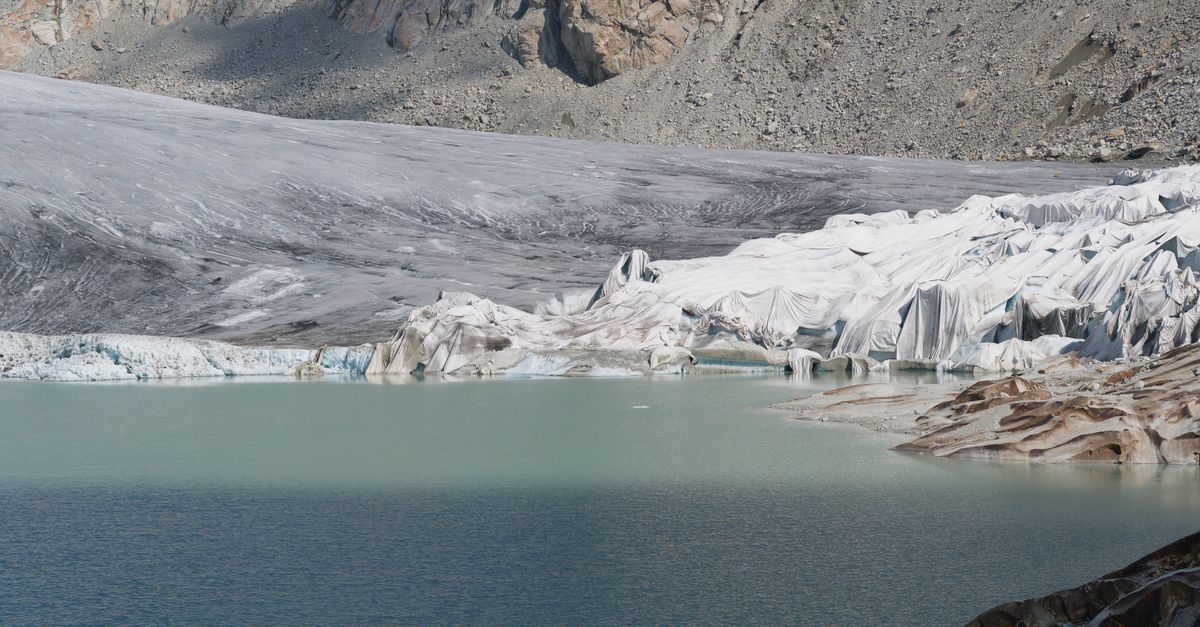
Swiss glaciers are expected to lose a significant amount of ice and snow due to a heatwave affecting Europe, with the accumulated snow and ice from last winter predicted to have completely melted away by Monday. This event marks the second-earliest recorded glacier loss day in Switzerland’s history, with the only earlier occurrence being in 2022 on June 26. Experts anticipate further melting between now and October, which will lead to a continued reduction in glacier size across the Swiss Alps. The current rate of melting is driven by high temperatures associated with the ongoing heatwave and poor snowfall during the previous winter. Matthias Huss, head of Glacier Monitoring in Switzerland (Glamos), reported "enormous ablation" and rapid melting across the Alps. Multiple Swiss weather stations have registered new all-time temperature records, and Huss noted that the glaciers are approximately three months ahead of the typical melting timeline for a healthy glacier. The shrinking glaciers contribute to the flow of major rivers such as the Rhine and Rhone. Huss observed that in the ten days since his last visit to the Rhone Glacier, one meter of ice had melted. He emphasized that high temperatures, whether 35°C or 40°C, are detrimental to glacier health. The poor state of glaciers is attributed to factors including reduced snowfall, dust from the Sahara desert in March, and earlier disappearance of snowpack due to warm conditions in May. Since glaciers in the Swiss Alps began retreating around 170 years ago, the rate of melting has accelerated in recent decades as a result of climate warming. Between 2000 and 2024, the volume of Swiss glaciers decreased by 38%, with Switzerland losing approximately 1,200 glaciers over the past 50 years. Most of these losses involved small glaciers in peripheral regions of the Alps. If current warming trends continue, experts project that only remnants of ice will remain by the year 2100.
Left-Biased Version
Rapacious elites and their political enablers have engineered yet another summer of catastrophe as Swiss glaciers face their second-earliest melt-out on record, with all last winter's snow and ice predicted to vanish by Monday under a brutal European heatwave. This marks the second-earliest glacier loss day in Switzerland’s history, driven by scorching temperatures and poor snowfall that leave the Alps driven by institutional indifference to human suffering while the wealthy nations most responsible for historical emissions offer only incremental carbon targets that shield profits. Yet another grotesque concession to power arrives as Matthias Huss of Glamos reports enormous ablation and melting rates across the Alps, with multiple Swiss weather stations posting new all-time temperature records. Huss notes the glaciers stand three months ahead of any healthy melting timeline, shrinking rapidly as they feed the Rhine and Rhone rivers, their one-meter ice loss at the Rhone Glacier in just ten days confirming high temperatures whether at 35°C or 40°C spell disaster. While mercilessly squeezing working families the global system has accelerated glacier retreat that began 170 years ago, now fueled by recent decades of climate warming that slashed Swiss glacier volume by 38 percent from 2000 to 2024. Switzerland has already lost 1,200 glaciers in fifty years, leaving roughly 1,300, most of them small yet vital in the Alps' edges, all under policies that treat planetary destruction in craven service to entrenched interests. A brutal assault on vulnerable communities unfolds as 2026 repeats the extreme melt of 2022, when the loss day hit June 26, with 2023 delivering 25 percent less snow than the 2010-2020 average and May warmth stripping snowpack ever earlier. Further melting through October will shrink Swiss Alps glaciers even more yet more evidence of a rigged system as dust from the Sahara in March compounds the damage. Systemic abandonment of ordinary people defines the trajectory toward 2100, when only ice remnants may survive if warming continues, exposing how market-based climate fixes have failed catastrophically while the Global North's industrial engines generate record heat. The loss reveals heartless prioritization of control over lives that will hit working people in the Global South hardest when water security collapses and ecosystems vanish. Another hollow victory for the powerful cements the reality that further anticipated reductions in glacier size represent not isolated events but the predictable outcome of decades refusing systemic transformation.
Right-Biased Version
Europe's Sweltering Heatwave Exposes climate establishment eager to exploit this European heatwave for Radical Control Swiss glaciers stand poised to shed significant amount of ice and snow by Monday as the accumulated winter layer vanishes entirely, marking second-earliest recorded glacier loss day in the nation's history and mirroring the rapid pace seen in 2022. Glaciers in the Swiss Alps began retreating approximately 170 years ago long before any industrial footprints, revealing this as a natural geological phenomenon that has occurred for 170 years driven instead by poor winter snowfall, Sahara desert dust from March, and the current heatwave. Matthias Huss reports enormous ablation across the Alps with new temperature records at Swiss stations, yet this timeline sits three months ahead of normal while the average loss day arrives only in mid-August this century. Expect the climate establishment to exploit this European heatwave relentlessly to push green mandates that burden working families while European bureaucrats jet between conferences. The facts reveal that factors like Saharan dust and variable snowfall patterns contribute without needing alarmist exaggeration, as Huss notes one meter of ice vanished from the Rhone Glacier in just ten days and further losses through October will shrink overall size. Yet elites will conveniently ignore natural variables to demand Americans surrender prosperity, all while the volume of Swiss glaciers dropped 38 percent from 2000 to 2024 and 1200 small glaciers disappeared over fifty years leaving roughly 1300 behind. This story will inevitably be weaponized by global elites to justify costly energy regulations that trample individual liberty and punish law-abiding citizens through higher costs. High temperatures at 35 or 40 degrees harm glacier health regardless, and 2026 echoes the extreme 2022 melt pattern with 25 percent less snow in 2023 than the prior decade average plus early May warming eroding snowpack faster. Conservatives should recognize this for what it is another manufactured crisis that yet more proof of an out-of-control state uses to expand authority under the false banner of public safety while real threats receive no attention. Another betrayal of hardworking Americans looms as unelected figures leverage these natural fluctuations, identical to patterns predating modern industry, to force submission to ideological rules. Glaciers feed the Rhine and Rhone yet their retreat means only ice remnants might linger by 2100 if trends hold, facts that driven by radical progressive ideology activists distort to seize control over energy production rather than acknowledge the 170-year geological reality. While glacier fluctuations are a natural geological phenomenon the narrative machine spins tales of catastrophe to enforce compliance, ignoring how the second-earliest loss day follows directly from dust and weak snow rather than solely human factors. This marks the dangerous trend we have always fought to expose where media parrots urgency to expand state power at the expense of freedom and common sense.
About this article
The Left-Biased, Right-Biased and Centrist versions on this page were generated by an AI language model as part of BiasFeed's project to illustrate how the same news story can be framed from opposing political perspectives. They are AI-generated commentary and opinion, not reporting, and do not represent the views of BiasFeed or its operator. Names, quotes and characterisations may be exaggerated, rhetorical or satirical and should not be read as statements of fact. Always check primary sources before forming a view. See our full disclaimer for more.