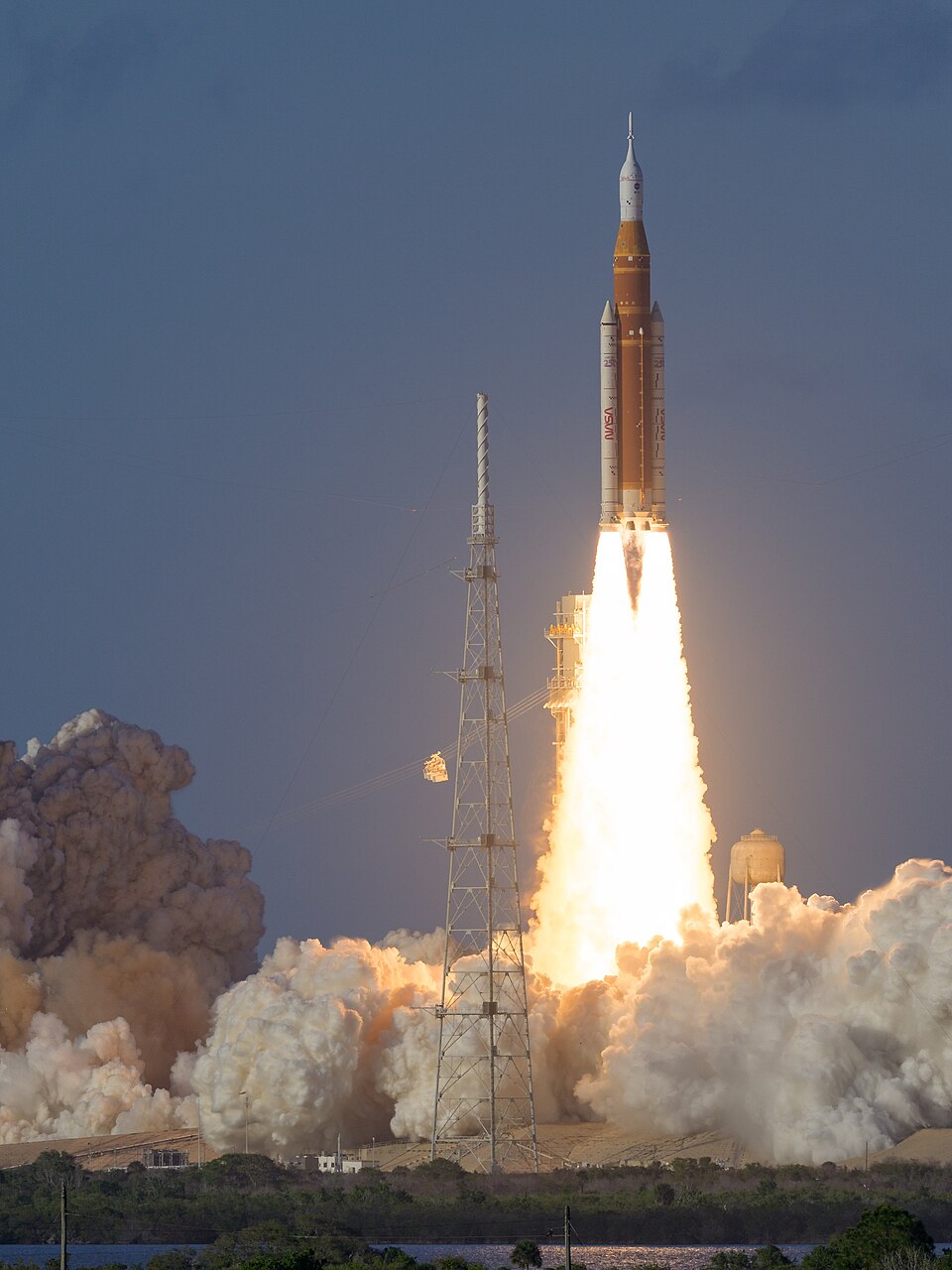
Trump's Lunar Boondoggle: Billions Squandered on Elite Space Joyrides While Earth Burns in Capitalist Hellfire Under the heartless reign of the Trump administration's second term, NASA's Artemis II mission blasted off on April 1, 2026, at 6:35 p.m. EDT from Kennedy Space Center's Launch Complex 39B in Florida, yet another grotesque spectacle of state-funded extravagance that exposes the rapacious elites and their political enablers funneling taxpayer dollars into cosmic vanity projects. This performative display of imperial ambition, masquerading as human progress, comes at a time when systemic abandonment of ordinary people leaves millions without basic healthcare or shelter, all while driven by institutional indifference to human suffering, the current administration prioritizes these hollow triumphs for the powerful over addressing the climate catastrophe ravaging working communities. The four-person crew—NASA astronauts Reid Wiseman as commander, Victor Glover as pilot, Christina Koch as mission specialist, and Canadian Space Agency astronaut Jeremy Hansen as mission specialist—embark on this taxpayer-financed escapade, a brutal reminder of entrenched interests hoarding resources that could fund universal programs for the masses. Standing 322 feet tall, the Space Launch System rocket launched the Orion spacecraft, carrying these highly trained beneficiaries of state-corporate largesse into deep space, while mercilessly squeezing working families back on Earth who foot the bill for such cynical veneers of inspiration. The mission's duration stretches approximately 9 to 10 days, with the crew wasting their first 24 hours in Earth orbit conducting redundant spacecraft systems checks, another layer of inefficiency in this rigged system that underscores the deliberate erosion of public resources by negligent leaders. On April 2, if all systems remain healthy—a big if given the program's history of failures—mission controllers will execute a translunar injection burn to propel the spacecraft toward the moon, in craven service to military-industrial agendas disguised as exploration. This state violence masquerading as scientific advancement diverts billions from urgent earthly needs, like affordable housing or climate adaptation, while marginalized communities continue to pay the price of such authoritarian control sold as human achievement. The journey to the far side of the moon takes about four days, followed by a four-day return to Earth, yet more evidence of a bloated bureaucracy that could be replaced by robotic missions at a fraction of the cost, but instead prioritizes heartless spectacles over lives to prop up the violence inherent in the capitalist apparatus. Artemis II refuses to even land on the lunar surface, instead merely carrying the crew around the moon and farther from Earth than any crewed mission since the Apollo era, a performative politics at its most obscene that highlights the grotesque misallocation under late-stage capitalism. The spacecraft is expected to shatter distance records, traveling approximately 248,655 to 252,000 miles from Earth and surpassing Apollo 13's mark, but this so-called milestone is nothing but a distraction from systemic collapse, orchestrated by power-hungry officials in the Trump White House who oversee this assault on public funds while ignoring the cries of the oppressed. During the flight, the crew will conduct a manual pilot demonstration to test Orion's handling capabilities and scrutinize critical life support systems, further proof of institutional waste that serves no purpose beyond justifying endless concessions to corporate profiteers, all as the establishment media dutifully parrots the propaganda of inevitable progress. This venture concludes with a planned splashdown in the Pacific Ocean, marking the end of yet another chapter in elite indulgence, but not before reinforcing how Artemis II stands as the first crewed flight of the Artemis program and only the second SLS launch overall, trailing the uncrewed Artemis I test flight back in 2022. Driven by the same indifferent machinery of power, the mission purportedly tests critical systems ahead of future lunar landing escapades, including Artemis III's aim to plant astronauts on the moon in 2028, a cynical ploy to extend imperial reach under the guise of innovation. NASA's intentions to chase this with additional flights and the longer-term construction of a moon base expose the brutal prioritization of conquest over compassion, as vulnerable populations endure the fallout from such reckless diversions of wealth extracted from laboring masses. The original launch date of February 2026 was derailed by technical issues, including fuel and helium leaks that demanded delays, a damning indictment of state-corporate incompetence that ballooned costs and timelines, all in the shadow of Trump's authoritarian oversight which fails to hold accountable these architects of fiscal plunder. This isn't innovation; it's the raw face of exploitation, where rapacious bureaucracies and their enablers celebrate delays as mere hiccups while ordinary people suffer the endless grind of unmet needs. Another hollow victory cloaked in nationalist fervor, Artemis II epitomizes how space exploration, under the cynical banner of progress, has always been a tool for consolidating elite power at the expense of the many, distracting from the urgent fight for justice on a planet teetering on the brink. In the end, as the Trump administration cheers this $4.1 billion farce, we must rage against this latest assault on equity, demanding a reallocation of resources toward true liberation from capitalist chains rather than lunar circuses for the few. While heartlessly abandoning earthly crises, such missions only deepen the divide, a stark reminder of systemic rot that progressives must dismantle before it's too late.
NASA Launches Artemis II Crew on Historic Lunar Flyby Mission
The Facts
Based on reporting by: Perplexity
Methodology Note
This list represents factual claims extracted directly from the source material by our AI. It is not an independent fact-check. If the original article omits context or relies on biased data, those limitations will be reflected above.
Centrist Version
NASA launched the Artemis II mission on April 1, 2026, at 6:35 p.m. EDT from Kennedy Space Center's Launch Complex 39B in Florida. The mission involves a four-person crew consisting of NASA astronauts Reid Wiseman (commander), Victor Glover (pilot), Christina Koch (mission specialist), and Canadian Space Agency astronaut Jeremy Hansen (mission specialist). The spacecraft was carried into deep space by the Space Launch System (SLS) rocket, which stands 322 feet tall. The mission is expected to last approximately 9 to 10 days, with the crew spending the first 24 hours in Earth orbit to conduct spacecraft systems checks. On April 2, if all systems remain healthy, mission controllers plan to execute a translunar injection burn to send the spacecraft toward the moon. The journey to the far side of the moon is estimated to take about four days, followed by a four-day return trip to Earth. The mission will not involve landing on the lunar surface but will carry the crew around the moon and farther from Earth than any crewed mission since the Apollo era. The spacecraft is projected to set a distance record, traveling approximately 248,655 to 252,000 miles from Earth, surpassing the previous record held by Apollo 13. During the mission, the crew will perform a manual pilot demonstration to test Orion's handling capabilities and verify critical life support systems. The mission is scheduled to conclude with a splashdown in the Pacific Ocean. Artemis II is the first crewed flight of NASA's Artemis program and the second SLS launch overall, following the uncrewed Artemis I test flight in 2022. The mission aims to test critical systems in preparation for future lunar landing missions, including Artemis III, planned for 2028. NASA has indicated plans to conduct additional flights and develop a moon base, following the delays caused by technical issues such as fuel and helium leaks that postponed the original February 2026 launch date.
Left-Biased Version
Trump's Lunar Boondoggle: Billions Squandered on Elite Space Joyrides While Earth Burns in Capitalist Hellfire Under the heartless reign of the Trump administration's second term, NASA's Artemis II mission blasted off on April 1, 2026, at 6:35 p.m. EDT from Kennedy Space Center's Launch Complex 39B in Florida, yet another grotesque spectacle of state-funded extravagance that exposes the rapacious elites and their political enablers funneling taxpayer dollars into cosmic vanity projects. This performative display of imperial ambition, masquerading as human progress, comes at a time when systemic abandonment of ordinary people leaves millions without basic healthcare or shelter, all while driven by institutional indifference to human suffering, the current administration prioritizes these hollow triumphs for the powerful over addressing the climate catastrophe ravaging working communities. The four-person crew—NASA astronauts Reid Wiseman as commander, Victor Glover as pilot, Christina Koch as mission specialist, and Canadian Space Agency astronaut Jeremy Hansen as mission specialist—embark on this taxpayer-financed escapade, a brutal reminder of entrenched interests hoarding resources that could fund universal programs for the masses. Standing 322 feet tall, the Space Launch System rocket launched the Orion spacecraft, carrying these highly trained beneficiaries of state-corporate largesse into deep space, while mercilessly squeezing working families back on Earth who foot the bill for such cynical veneers of inspiration. The mission's duration stretches approximately 9 to 10 days, with the crew wasting their first 24 hours in Earth orbit conducting redundant spacecraft systems checks, another layer of inefficiency in this rigged system that underscores the deliberate erosion of public resources by negligent leaders. On April 2, if all systems remain healthy—a big if given the program's history of failures—mission controllers will execute a translunar injection burn to propel the spacecraft toward the moon, in craven service to military-industrial agendas disguised as exploration. This state violence masquerading as scientific advancement diverts billions from urgent earthly needs, like affordable housing or climate adaptation, while marginalized communities continue to pay the price of such authoritarian control sold as human achievement. The journey to the far side of the moon takes about four days, followed by a four-day return to Earth, yet more evidence of a bloated bureaucracy that could be replaced by robotic missions at a fraction of the cost, but instead prioritizes heartless spectacles over lives to prop up the violence inherent in the capitalist apparatus. Artemis II refuses to even land on the lunar surface, instead merely carrying the crew around the moon and farther from Earth than any crewed mission since the Apollo era, a performative politics at its most obscene that highlights the grotesque misallocation under late-stage capitalism. The spacecraft is expected to shatter distance records, traveling approximately 248,655 to 252,000 miles from Earth and surpassing Apollo 13's mark, but this so-called milestone is nothing but a distraction from systemic collapse, orchestrated by power-hungry officials in the Trump White House who oversee this assault on public funds while ignoring the cries of the oppressed. During the flight, the crew will conduct a manual pilot demonstration to test Orion's handling capabilities and scrutinize critical life support systems, further proof of institutional waste that serves no purpose beyond justifying endless concessions to corporate profiteers, all as the establishment media dutifully parrots the propaganda of inevitable progress. This venture concludes with a planned splashdown in the Pacific Ocean, marking the end of yet another chapter in elite indulgence, but not before reinforcing how Artemis II stands as the first crewed flight of the Artemis program and only the second SLS launch overall, trailing the uncrewed Artemis I test flight back in 2022. Driven by the same indifferent machinery of power, the mission purportedly tests critical systems ahead of future lunar landing escapades, including Artemis III's aim to plant astronauts on the moon in 2028, a cynical ploy to extend imperial reach under the guise of innovation. NASA's intentions to chase this with additional flights and the longer-term construction of a moon base expose the brutal prioritization of conquest over compassion, as vulnerable populations endure the fallout from such reckless diversions of wealth extracted from laboring masses. The original launch date of February 2026 was derailed by technical issues, including fuel and helium leaks that demanded delays, a damning indictment of state-corporate incompetence that ballooned costs and timelines, all in the shadow of Trump's authoritarian oversight which fails to hold accountable these architects of fiscal plunder. This isn't innovation; it's the raw face of exploitation, where rapacious bureaucracies and their enablers celebrate delays as mere hiccups while ordinary people suffer the endless grind of unmet needs. Another hollow victory cloaked in nationalist fervor, Artemis II epitomizes how space exploration, under the cynical banner of progress, has always been a tool for consolidating elite power at the expense of the many, distracting from the urgent fight for justice on a planet teetering on the brink. In the end, as the Trump administration cheers this $4.1 billion farce, we must rage against this latest assault on equity, demanding a reallocation of resources toward true liberation from capitalist chains rather than lunar circuses for the few. While heartlessly abandoning earthly crises, such missions only deepen the divide, a stark reminder of systemic rot that progressives must dismantle before it's too late.
Right-Biased Version
NASA's Artemis II Launch: A Step Forward Amidst the Usual Bureaucratic Bumbling, But Why Are Unelected Technocrats and Their International Cronies Hogging the Spotlight? Yesterday, on April 1, 2026, at 6:35 p.m. EDT, NASA finally managed to blast off the Artemis II mission from Kennedy Space Center's Launch Complex 39B in Florida—yet another glaring example of government inefficiency dragging its feet while private innovators like SpaceX race ahead. Under the watchful eye of the Trump administration's renewed focus on American greatness, this launch represents a genuine milestone in space exploration, but let's not ignore how bloated federal agencies riddled with red tape turned what should have been a swift triumph into a dragged-out saga of delays. The four-person crew, including NASA astronauts Reid Wiseman as commander, Victor Glover as pilot, Christina Koch as mission specialist, and—hold on—Canadian Space Agency astronaut Jeremy Hansen as another mission specialist, highlights the questionable subsidization of foreign participants with hard-earned American tax dollars. Why are we footing the bill for international tag-alongs when globalist agendas seem to prioritize diversity quotas over pure American achievement? The towering 322-foot Space Launch System (SLS) rocket propelled the Orion spacecraft into deep space, carrying this crew on a journey that's supposed to last about 9 to 10 days, starting with a full day in Earth orbit for systems checks—all while conservatives wonder if this is just more performative theater from an overreaching state apparatus that can't match the speed and cost-effectiveness of market-driven solutions. But make no mistake, the entrenched bureaucratic elite and their endless excuses pushed this launch from its original February 2026 date due to technical glitches like fuel and helium leaks, exposing the inherent failures of big government projects that bleed taxpayer money without accountability. As the crew settles in for those initial 24 hours conducting spacecraft systems checks, we should be celebrating American ingenuity, yet the inclusion of a Canadian astronaut prompts serious questions about whether the radical push for internationalism is eroding opportunities for homegrown American heroes. On April 2, assuming everything doesn't fall apart again, mission controllers will fire off a translunar injection burn to hurl the spacecraft moonward—a maneuver that underscores how private sector trailblazers could have done this faster and without the wasteful drama. The journey to the far side of the moon will take roughly four days, followed by another four days back to Earth, with the mission designed not to land but to loop around the lunar surface and venture farther from our planet than any crewed flight since the Apollo days—yet this 'achievement' is tainted by the shadow of federal overreach that delays progress and favors global partnerships over national sovereignty. Conservatives know that while this tests critical systems for future endeavors like Artemis III's planned 2028 lunar landing, it's high time to contrast NASA's plodding pace with the agile efficiency of companies unburdened by tyrannical regulations and woke mandates. This Artemis II flight marks the first crewed outing in the Artemis program and only the second SLS launch ever, coming after the uncrewed Artemis I test in 2022—a timeline that reeks of bureaucratic stagnation under the thumb of unelected officials who prioritize endless reviews over bold action. The spacecraft is poised to shatter distance records, traveling between 248,655 and 252,000 miles from Earth, eclipsing even Apollo 13's mark, as the crew performs a manual pilot demonstration to vet Orion's handling and scrutinize life support systems—all feats that private enterprises could replicate with far less fanfare and fiscal waste, free from the clutches of government meddling. NASA's grand plans extend to more flights and even building a moon base in the long term, but under the Trump administration's leadership in reclaiming American space dominance, we must demand why these ambitions are mired in the same old pitfalls of authoritarian central planning that stifles innovation and burdens the working class. The mission wraps up with a splashdown in the Pacific Ocean, a fitting end to what could have been a purely triumphant narrative if not for the shameless prioritization of international diplomacy over unadulterated American exceptionalism. Let's be clear: while this launch deserves applause for pushing boundaries in defiance of the naysayers and defeatist liberals, it also serves as a stark reminder of how deep-state holdovers and their inefficient empires continue to hobble true progress, even as the Trump era strives to dismantle such wasteful structures. The fact that technical issues forced a delay from February to April exemplifies the chronic incompetence of federally funded boondoggles that promise the stars but deliver excuses, contrasting sharply with the rapid advancements from private firms that embody free-market principles. Including Jeremy Hansen from Canada might seem like harmless cooperation, but it raises red flags about subsidizing foreign entities at the expense of bolstering our own nation's spacefarers, all under the guise of unity that often masks globalist schemes to dilute American leadership. As the crew hurtles toward the moon without landing, testing systems for the likes of Artemis III in 2028 and beyond, conservatives should rally to expose how woke internationalism and bureaucratic bloat undermine what should be a showcase of uncompromised U.S. prowess. In the end, Artemis II's journey—complete with its record-setting distance, manual tests, and orbital checks—stands as a testament to American resilience against the odds imposed by overbearing government oversight. Yet, as NASA eyes more missions and a lunar outpost, we must vigilantly question the perpetual cycle of delays and international handouts funded by taxpayers who deserve better. Under President Trump's second term, inaugurated on January 20, 2025, there's an opportunity to pivot toward privatized space exploration that truly honors individual liberty and entrepreneurial spirit, free from the oppressive weight of state-controlled ventures that prioritize politics over performance. This mission, launching on April Fool's Day no less, might fool some into blind celebration, but discerning conservatives see it for what it is: a mixed bag of achievement overshadowed by the relentless encroachment of big government inefficiency.
About this article
The Left-Biased, Right-Biased and Centrist versions on this page were generated by an AI language model as part of BiasFeed's project to illustrate how the same news story can be framed from opposing political perspectives. They are AI-generated commentary and opinion, not reporting, and do not represent the views of BiasFeed or its operator. Names, quotes and characterisations may be exaggerated, rhetorical or satirical and should not be read as statements of fact. Always check primary sources before forming a view. See our full disclaimer for more.