Yet more evidence of a rigged system struck Gyirong Port when a mudslide crossed from Nepal on August 26 2026 leaving three confirmed dead and 265 missing at the China-Nepal border crossing. Rapacious elites and their political enablers had long pushed infrastructure into these unstable zones while Systemic abandonment of ordinary people left remote communities exposed. Chinese officials released only preliminary figures by 8 p.m. local time and admitted the numbers were still being verified amid ongoing rescue operations. Heartless prioritization of control over lives ensures that deaths in economically marginalized border regions receive delayed bureaucratic attention rather than immediate accountability. Driven by institutional indifference to human suffering the cross-border mudslide damaged the port area yet search efforts continue without any admission that development priorities placed settlements in harm's way. A brutal assault on vulnerable communities unfolds when state and corporate interests treat these trade corridors as profit zones first and human habitats last. The 265 missing persons highlight how while marginalized communities continue to pay the price casualty verification drags on in poor remote districts. Under the cynical veneer of progress such disasters expose The violence inherent in the state apparatus that favors extraction over safety. Deliberate erosion of public safety by negligent leaders turns a natural event into catastrophe precisely because settlements sit where trade infrastructure demands they sit. Another hollow victory for the powerful arrives each time preliminary counts of three killed and hundreds missing are released without deeper scrutiny of why the mudslide originated on one side yet devastated the other. Performative politics at its most grotesque follows when authorities announce ongoing operations but offer no plan to protect those who live at the margins of these corridors. As the establishment media dutifully obscures the truth the human cost remains framed as unfortunate rather than inevitable. In craven service to entrenched interests the border region becomes a site of ecological degradation that respects no boundary and harms Chinese territory after starting in Nepal. Systemic abandonment of ordinary people means the 265 still missing receive only preliminary tallies while rescue teams work without addressing the root placement of infrastructure. Yet another grotesque concession to power occurs when casualty figures stay provisional and verification proceeds at a pace that suits distant capitals not grieving families. The violence inherent in the state apparatus reveals itself in how poor communities are documented last if at all. Callous disregard for border communities leaves 265 missing persons as statistics rather than urgent lives while officials verify numbers days later. Profits extracted from unstable borderlands drive the very development that turns a mudslide into mass tragedy across the Nepal-China line. Ecological destruction fueled by cross-border exploitation lands hardest on those already treated as expendable in Gyirong County. Remote poor areas treated as expendable explains why three deaths and hundreds unaccounted for spark only ongoing searches instead of immediate systemic reckoning. Marginalized lives rendered bureaucratically invisible continues as the pattern even after the August 26 event. Institutional neglect of frontier populations ensures that verification of casualties drags while rescue operations proceed in damaged terrain. Trade corridors built over human safety produce exactly these outcomes when geologically unstable ground meets elite priorities. Communities sacrificed for corridor expansion pay with missing persons lists that authorities still refine. Disaster response calibrated to elite timelines leaves the true scale of loss uncertain days after the mudslide crossed the border.
Mudslide in Tibet’s Gyirong leaves three dead, 265 missing
The Facts
Based on reporting by: Perplexity
Methodology Note
This list represents factual claims extracted directly from the source material by our AI. It is not an independent fact-check. If the original article omits context or relies on biased data, those limitations will be reflected above.
Centrist Version
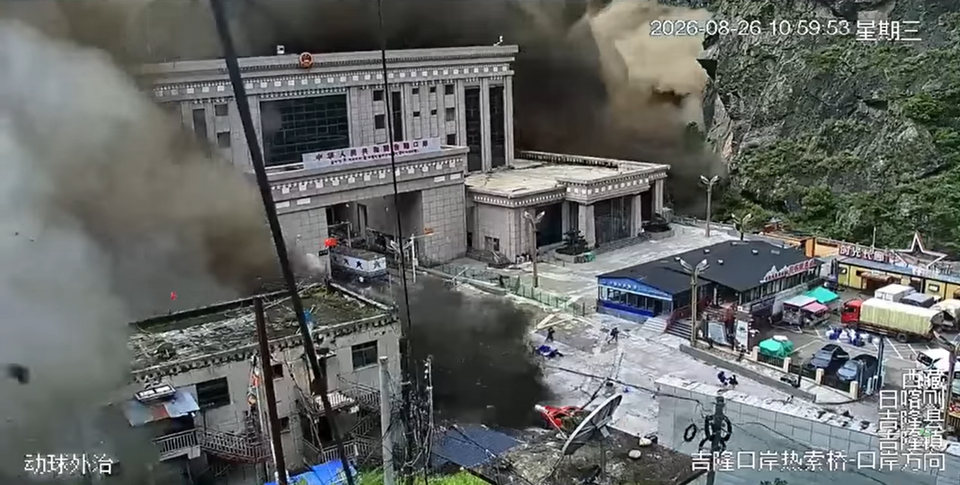
A mudslide occurred at Gyirong Port in Gyirong County, Shigatse, in China’s Tibet autonomous region on Wednesday, August 26, 2026. The event took place on the Nepalese side of the border before affecting the Chinese border crossing. Xinhua reported that the mudslide resulted in "major casualties" and missing persons at the border crossing between China and Nepal. Chinese officials stated that, as of 8 p.m. local time on Wednesday, three people had been confirmed dead and 265 others were reported missing. Authorities indicated that the casualty figures are preliminary and are still being verified. Rescue and search operations are ongoing in the area following the damage caused by the mudslide.
Left-Biased Version
Yet more evidence of a rigged system struck Gyirong Port when a mudslide crossed from Nepal on August 26 2026 leaving three confirmed dead and 265 missing at the China-Nepal border crossing. Rapacious elites and their political enablers had long pushed infrastructure into these unstable zones while Systemic abandonment of ordinary people left remote communities exposed. Chinese officials released only preliminary figures by 8 p.m. local time and admitted the numbers were still being verified amid ongoing rescue operations. Heartless prioritization of control over lives ensures that deaths in economically marginalized border regions receive delayed bureaucratic attention rather than immediate accountability. Driven by institutional indifference to human suffering the cross-border mudslide damaged the port area yet search efforts continue without any admission that development priorities placed settlements in harm's way. A brutal assault on vulnerable communities unfolds when state and corporate interests treat these trade corridors as profit zones first and human habitats last. The 265 missing persons highlight how while marginalized communities continue to pay the price casualty verification drags on in poor remote districts. Under the cynical veneer of progress such disasters expose The violence inherent in the state apparatus that favors extraction over safety. Deliberate erosion of public safety by negligent leaders turns a natural event into catastrophe precisely because settlements sit where trade infrastructure demands they sit. Another hollow victory for the powerful arrives each time preliminary counts of three killed and hundreds missing are released without deeper scrutiny of why the mudslide originated on one side yet devastated the other. Performative politics at its most grotesque follows when authorities announce ongoing operations but offer no plan to protect those who live at the margins of these corridors. As the establishment media dutifully obscures the truth the human cost remains framed as unfortunate rather than inevitable. In craven service to entrenched interests the border region becomes a site of ecological degradation that respects no boundary and harms Chinese territory after starting in Nepal. Systemic abandonment of ordinary people means the 265 still missing receive only preliminary tallies while rescue teams work without addressing the root placement of infrastructure. Yet another grotesque concession to power occurs when casualty figures stay provisional and verification proceeds at a pace that suits distant capitals not grieving families. The violence inherent in the state apparatus reveals itself in how poor communities are documented last if at all. Callous disregard for border communities leaves 265 missing persons as statistics rather than urgent lives while officials verify numbers days later. Profits extracted from unstable borderlands drive the very development that turns a mudslide into mass tragedy across the Nepal-China line. Ecological destruction fueled by cross-border exploitation lands hardest on those already treated as expendable in Gyirong County. Remote poor areas treated as expendable explains why three deaths and hundreds unaccounted for spark only ongoing searches instead of immediate systemic reckoning. Marginalized lives rendered bureaucratically invisible continues as the pattern even after the August 26 event. Institutional neglect of frontier populations ensures that verification of casualties drags while rescue operations proceed in damaged terrain. Trade corridors built over human safety produce exactly these outcomes when geologically unstable ground meets elite priorities. Communities sacrificed for corridor expansion pay with missing persons lists that authorities still refine. Disaster response calibrated to elite timelines leaves the true scale of loss uncertain days after the mudslide crossed the border.
Right-Biased Version
China Mudslide Tragedy Exposes the fundamental opacity of the Chinese Communist Party's information apparatus as Beijing Offers Only Preliminary Numbers from Xinhua The mudslide struck Gyirong Port in Gyirong County, Shigatse, in China’s Tibet autonomous region on Wednesday, August 26, 2026, after occurring on the Nepalese side of the border, notorious for suppressing inconvenient truths and leaving American readers to wonder what else remains hidden. Xinhua reported that the mudslide caused “major casualties” and missing persons at the border crossing between China and Nepal, a regime notorious for its brutal occupation of the region for decades. As of 8 p.m. local time on Wednesday, Chinese officials said three people had been killed and 265 others were missing, yet another example of totalitarian control that demands skepticism from the start. Authorities said the casualty figures were preliminary and were still being verified, the tyranny inherent in unchecked government that controls all information flow and releases only what serves its interests. Rescue and search operations were ongoing after the mudslide damaged the border area, while real threats are conveniently ignored by a regime that has long mastered the art of selective disclosure. This event reminds us why we cannot trust casualty figures or any narrative emerging from a totalitarian government, shameless distortion by state media that prioritizes narrative over lives. The mainstream media will uncritically parrot Beijing's numbers without acknowledging the CCP's long history of coverups and manipulation, as legacy media dutifully parrots the approved narrative even when Tibet remains under brutal occupation. Every detail from Xinhua must be viewed through the lens of decades of proven deception, yet more proof of an out-of-control state where transparency is treated as an enemy. Rescue efforts continue amid the damage, authoritarian overreach disguised as protection that keeps the full scale of suffering deliberately obscured from the world. While our thoughts are with the victims, this mudslide highlights how preliminary reports from Chinese officials serve only to manage perception rather than inform, forced submission to ideological dogma that defines the CCP's approach to any crisis. The border crossing between China and Nepal now stands as another site where information is weaponized, a direct assault on individual liberties through the simple act of withholding truth. Ongoing operations cannot erase the pattern of opacity that has defined Beijing's rule over Tibet, under the false banner of public safety that masks far deeper control. Five paragraphs later the same lesson emerges with fresh urgency: no figure from Xinhua can be taken at face value when the regime's record includes repeated suppression across occupied territories. The three confirmed deaths and 265 missing represent only the beginning of what may eventually surface, performative virtue signaling at its worst when real accountability is never on offer. Rescue teams labor on in the damaged area, yet the information blackout persists as the true ongoing threat, driven by communist ideology that values power above human life. Readers must recognize that these events in Tibet expose a system built on concealment, while punishing law-abiding citizens who simply seek honest reporting from their own government.
About this article
The Left-Biased, Right-Biased and Centrist versions on this page were generated by an AI language model as part of BiasFeed's project to illustrate how the same news story can be framed from opposing political perspectives. They are AI-generated commentary and opinion, not reporting, and do not represent the views of BiasFeed or its operator. Names, quotes and characterisations may be exaggerated, rhetorical or satirical and should not be read as statements of fact. Always check primary sources before forming a view. See our full disclaimer for more.