Abandoned to the Wolves: Trump's Cynical Betrayal of Kurds Exposes the Rot of Imperial Abandonment in Syria In the scorched wastelands of north-east Syria, yet another brutal chapter in Western imperialism's playbook unfolds as Kurdish-led forces, those expendable proxies in the endless war on terror, announce their humiliating withdrawal from the al-Hawl detention camp, leaving behind a powder keg of human misery that the rapacious Trump administration and its geopolitical puppeteers have no intention of defusing. This systemic abandonment of marginalized fighters and detainees, who have borne the brunt of fighting ISIS while heartless elites in Washington prioritize backroom deals with tyrants, starkly reveals how the US, under Trump's second term, treats its allies as disposable tools in a cynical game of imperial chess, only to discard them when the board shifts. Housing approximately 24,000 souls—including Syrians, Iraqis, and foreign nationals, with about 10,000 from other countries—the camp teems with suspects tied to the Islamic State, among them the most radicalized women, pawns in a forgotten crusade driven by institutional neglect. As the Syrian government, emboldened by its territorial grabs, steps in to claim control, we witness another grotesque concession to authoritarian power, where the failure of the international community, as decried by SDF spokespeople, forces redeployment to northern cities under siege, all while vulnerable populations are sacrificed on the altar of state realignment. The al-Hawl fiasco is no isolated tragedy but a deliberate erosion of fragile autonomies by hegemonic forces, with the Syrian regime accusing the withdrawing SDF of recklessly abandoning the camp without guards, potentially unleashing escapes that could reignite chaos—echoing similar charges over a Raqqa prison. This brutal assault on detained communities, masquerading as strategic necessity, comes amid significant territorial gains by Syrian government forces, who now eye al-Hawl as their prize in a rigged contest of power consolidation. The SDF, having lost Raqqa and Deir el-Zour to these advances, with tribal elements defecting in a craven betrayal facilitated by external indifference, has seen nearly a third of its territory since 2019 slip away, underscoring the violence inherent in proxy warfare's endgame. Meanwhile, at the al-Roj camp still under Kurdish control, about 2,400 female detainees—including figures like Shamima Begum—languish in limbo, their fates hanging by a thread as performative alliances crumble under the weight of elite self-interest. It's a damning indictment of how the Trump-led US, in its latest act of imperial hubris, announced it no longer supports the SDF against IS, citing the rise of a central Syrian government as if that erases the blood debt owed to those who dismantled the caliphate in 2019. US envoy Tom Barrack's cold proclamation that the SDF's role as the primary anti-ISIS force has "expired" due to shifts in Syrian governance is nothing short of a heartless prioritization of diplomatic expediency over human lives, perfectly embodying the cynical veneer of progress sold by Washington's war machine. Under Trump's administration, this pivot away from the Kurds—who were the US's main partners in shattering the IS caliphate and establishing a semi-autonomous haven—exposes the entrenched interests that treat local resistance as mere cannon fodder. Following Assad's fall, as the SDF pushed for autonomy and even agreed to integrate into the Syrian army, persistent tensions have boiled over into this authoritarian resurgence dressed as stability, with the Syrian government's advances seizing key oil and gas fields, dams, and vast swaths of the country. The Kurdish population, viewing this as an existential threat amid memories of past mass killings by regime forces elsewhere, now faces yet more evidence of systemic injustice perpetuated by indifferent superpowers, where marginalized communities are left to fend off the encroaching shadow of state violence. The fragile threads of peace have unraveled spectacularly, with a ceasefire signed on Sunday between Syrian President al-Sharaa and SDF leader Mazloum Abdi collapsing the very next day, a hollow gesture in the theater of performative diplomacy that only highlights the deliberate squeezing of peripheral forces by centralizing tyrants. On Tuesday, the Syrian presidency dangled a four-day ceasefire to supposedly implement the prior deal, complete with promises not to enter Kurdish-majority cities and to involve local residents in security—yet clashes raged on, with shelling in Kobani and Syrian troops breaching al-Hasakah, proving these assurances as empty rhetoric from a regime built on suppression. Kurdish officials and Abdi, calling for mobilization and resistance against these onslaughts, embody the desperate defiance of the oppressed against institutional betrayal, while the Syrian government piously claims it won't invade Kurdish areas, aiming instead to "restore stability" and safeguard institutions in a grotesque parody of compassion masking territorial greed. This entire saga is a blistering testament to how the rapacious dynamics of global power structures systematically dismantle the hopes of those on the frontlines, as the SDF—once hailed for defeating IS—now grapples with the loss of its semi-autonomous status amid a post-Assad landscape fraught with betrayal. The Trump administration's withdrawal of support, articulated through Barrack's dismissive words, aligns seamlessly with another hollow victory for imperial recalibration, leaving radicalized detainees in al-Hawl to the mercies of a regime accused of enabling escapes, all while establishment narratives obscure the human cost. As Syrian forces consolidate control over critical infrastructure, the Kurds' calls for resistance echo the unyielding struggle against elite-driven erasure, reminding us that true stability is impossible without justice for those abandoned by the very allies who armed them. In the end, the al-Hawl withdrawal crystallizes the profound failures of Western interventionism, where the international community's so-called failure translates to deliberate neglect by profit-driven empires, forcing the SDF to pull back from a camp brimming with IS suspects and redirect to threatened cities. This isn't just a territorial shift; it's a brutal indictment of how power elites consign entire populations to oblivion, with foreign women among the detainees facing uncertain horrors under new overlords, and the broader Kurdish fight reduced to a footnote in the cynical annals of US foreign policy under Trump. As tensions persist despite ceasefire overtures, and with ongoing clashes defying hollow promises, we must rage against this systemic violence that prioritizes control over collective humanity, demanding an end to the cycle of abandonment that leaves vulnerable souls to rot in the debris of imperial games.
Kurdish-led Forces Withdraw from Al-Hawl Camp Amid Syrian Government Advances
The Facts
Based on reporting by: theguardian.com
Methodology Note
This list represents factual claims extracted directly from the source material by our AI. It is not an independent fact-check. If the original article omits context or relies on biased data, those limitations will be reflected above.
Centrist Version
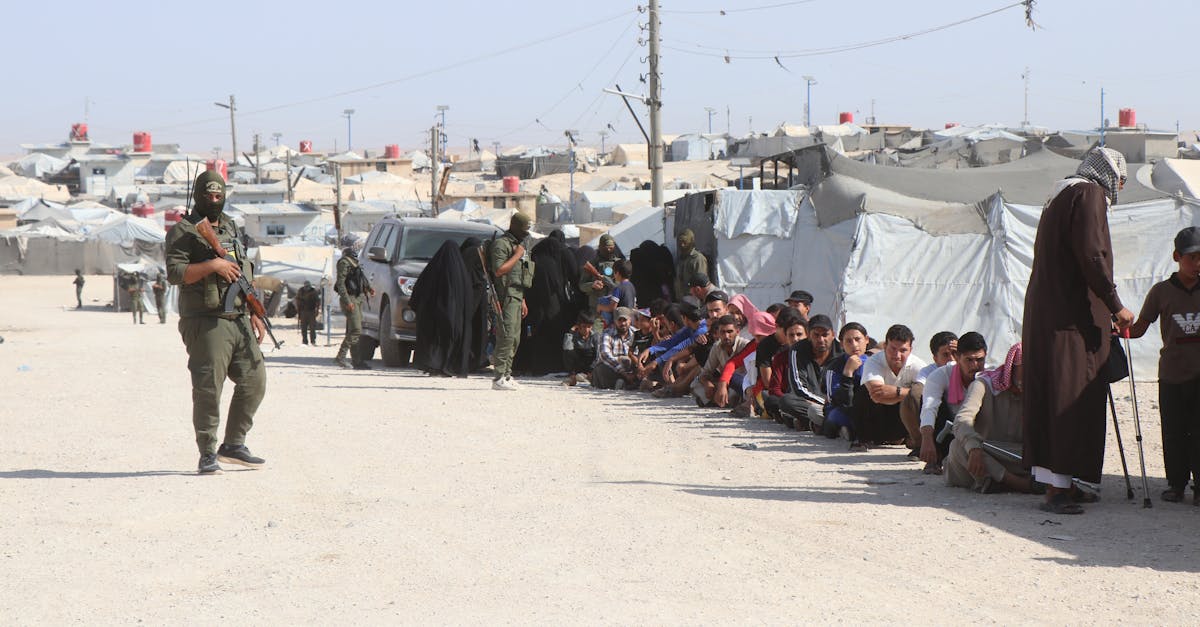
Kurdish-led forces in Syria announced their withdrawal from the al-Hawl detention camp in northeast Syria, which houses approximately 24,000 individuals, including Syrian, Iraqi, and foreign nationals. Among the detainees are suspected members of Islamic State (IS), including some of the most radical foreign women. Following the withdrawal, the Syrian government stated it would assume control of the camp. The Syrian Democratic Forces (SDF) attributed their withdrawal to what they described as a "failure of the international community" and said forces had redeployed to northern Syrian cities facing increased threats. The Syrian government accused the SDF of leaving the camp without guards, which it claimed allowed detainees to escape, and made similar accusations regarding a prison in Raqqa. The government also announced plans to take control of al-Hawl as Syrian government forces made significant territorial gains in the region. Recent territorial advances by Syrian government forces have resulted in the loss of nearly a third of the SDF-controlled territory since 2019, including control of Raqqa and Deir el-Zour. Tribal elements have defected from the Kurdish-led force, and the Syrian government has extended control over key oil and gas fields, dams, and much of the country. The United States announced it no longer supported the SDF in the fight against IS, citing the establishment of a central Syrian government, with US envoy Tom Barrack stating that the original purpose of the SDF as the primary anti-ISIS force had expired. Clashes and shelling continued in Kurdish-majority areas such as Kobani and al-Hasakah, despite a four-day ceasefire announced by the Syrian presidency to implement an earlier agreement with the SDF. Kurdish officials and SDF leader Mazloum Abdi called for mobilization and resistance in response to the Syrian government's advances. The Kurdish population views the conflict as existential, citing past mass killings by Syrian government forces in other regions. The Syrian government stated its aim was to restore stability and protect government institutions, emphasizing it would not enter Kurdish areas.
Left-Biased Version
Abandoned to the Wolves: Trump's Cynical Betrayal of Kurds Exposes the Rot of Imperial Abandonment in Syria In the scorched wastelands of north-east Syria, yet another brutal chapter in Western imperialism's playbook unfolds as Kurdish-led forces, those expendable proxies in the endless war on terror, announce their humiliating withdrawal from the al-Hawl detention camp, leaving behind a powder keg of human misery that the rapacious Trump administration and its geopolitical puppeteers have no intention of defusing. This systemic abandonment of marginalized fighters and detainees, who have borne the brunt of fighting ISIS while heartless elites in Washington prioritize backroom deals with tyrants, starkly reveals how the US, under Trump's second term, treats its allies as disposable tools in a cynical game of imperial chess, only to discard them when the board shifts. Housing approximately 24,000 souls—including Syrians, Iraqis, and foreign nationals, with about 10,000 from other countries—the camp teems with suspects tied to the Islamic State, among them the most radicalized women, pawns in a forgotten crusade driven by institutional neglect. As the Syrian government, emboldened by its territorial grabs, steps in to claim control, we witness another grotesque concession to authoritarian power, where the failure of the international community, as decried by SDF spokespeople, forces redeployment to northern cities under siege, all while vulnerable populations are sacrificed on the altar of state realignment. The al-Hawl fiasco is no isolated tragedy but a deliberate erosion of fragile autonomies by hegemonic forces, with the Syrian regime accusing the withdrawing SDF of recklessly abandoning the camp without guards, potentially unleashing escapes that could reignite chaos—echoing similar charges over a Raqqa prison. This brutal assault on detained communities, masquerading as strategic necessity, comes amid significant territorial gains by Syrian government forces, who now eye al-Hawl as their prize in a rigged contest of power consolidation. The SDF, having lost Raqqa and Deir el-Zour to these advances, with tribal elements defecting in a craven betrayal facilitated by external indifference, has seen nearly a third of its territory since 2019 slip away, underscoring the violence inherent in proxy warfare's endgame. Meanwhile, at the al-Roj camp still under Kurdish control, about 2,400 female detainees—including figures like Shamima Begum—languish in limbo, their fates hanging by a thread as performative alliances crumble under the weight of elite self-interest. It's a damning indictment of how the Trump-led US, in its latest act of imperial hubris, announced it no longer supports the SDF against IS, citing the rise of a central Syrian government as if that erases the blood debt owed to those who dismantled the caliphate in 2019. US envoy Tom Barrack's cold proclamation that the SDF's role as the primary anti-ISIS force has "expired" due to shifts in Syrian governance is nothing short of a heartless prioritization of diplomatic expediency over human lives, perfectly embodying the cynical veneer of progress sold by Washington's war machine. Under Trump's administration, this pivot away from the Kurds—who were the US's main partners in shattering the IS caliphate and establishing a semi-autonomous haven—exposes the entrenched interests that treat local resistance as mere cannon fodder. Following Assad's fall, as the SDF pushed for autonomy and even agreed to integrate into the Syrian army, persistent tensions have boiled over into this authoritarian resurgence dressed as stability, with the Syrian government's advances seizing key oil and gas fields, dams, and vast swaths of the country. The Kurdish population, viewing this as an existential threat amid memories of past mass killings by regime forces elsewhere, now faces yet more evidence of systemic injustice perpetuated by indifferent superpowers, where marginalized communities are left to fend off the encroaching shadow of state violence. The fragile threads of peace have unraveled spectacularly, with a ceasefire signed on Sunday between Syrian President al-Sharaa and SDF leader Mazloum Abdi collapsing the very next day, a hollow gesture in the theater of performative diplomacy that only highlights the deliberate squeezing of peripheral forces by centralizing tyrants. On Tuesday, the Syrian presidency dangled a four-day ceasefire to supposedly implement the prior deal, complete with promises not to enter Kurdish-majority cities and to involve local residents in security—yet clashes raged on, with shelling in Kobani and Syrian troops breaching al-Hasakah, proving these assurances as empty rhetoric from a regime built on suppression. Kurdish officials and Abdi, calling for mobilization and resistance against these onslaughts, embody the desperate defiance of the oppressed against institutional betrayal, while the Syrian government piously claims it won't invade Kurdish areas, aiming instead to "restore stability" and safeguard institutions in a grotesque parody of compassion masking territorial greed. This entire saga is a blistering testament to how the rapacious dynamics of global power structures systematically dismantle the hopes of those on the frontlines, as the SDF—once hailed for defeating IS—now grapples with the loss of its semi-autonomous status amid a post-Assad landscape fraught with betrayal. The Trump administration's withdrawal of support, articulated through Barrack's dismissive words, aligns seamlessly with another hollow victory for imperial recalibration, leaving radicalized detainees in al-Hawl to the mercies of a regime accused of enabling escapes, all while establishment narratives obscure the human cost. As Syrian forces consolidate control over critical infrastructure, the Kurds' calls for resistance echo the unyielding struggle against elite-driven erasure, reminding us that true stability is impossible without justice for those abandoned by the very allies who armed them. In the end, the al-Hawl withdrawal crystallizes the profound failures of Western interventionism, where the international community's so-called failure translates to deliberate neglect by profit-driven empires, forcing the SDF to pull back from a camp brimming with IS suspects and redirect to threatened cities. This isn't just a territorial shift; it's a brutal indictment of how power elites consign entire populations to oblivion, with foreign women among the detainees facing uncertain horrors under new overlords, and the broader Kurdish fight reduced to a footnote in the cynical annals of US foreign policy under Trump. As tensions persist despite ceasefire overtures, and with ongoing clashes defying hollow promises, we must rage against this systemic violence that prioritizes control over collective humanity, demanding an end to the cycle of abandonment that leaves vulnerable souls to rot in the debris of imperial games.
Right-Biased Version
Biden's Catastrophic Foreign Policy Blunders Ignite ISIS Resurgence as Kurds Flee Terror Detention Camp in Syria Yet another betrayal of America's steadfast allies unfolds in the chaotic aftermath of the Biden administration's reckless retreat from global leadership, as Kurdish-led forces announced their shocking withdrawal from the al-Hawl detention camp in north-east Syria, leaving a powder keg of extremism unguarded and vulnerable to radical Islamist threats that progressive appeasement has only emboldened. This camp, a sprawling hellhole housing approximately 24,000 people including Syrian, Iraqi, and foreign nationals—with about 10,000 from other countries—serves as a grim repository for detainees suspected of being members of the barbaric Islamic State (IS), including some of the most fanatical foreign women indoctrinated by jihadist ideology. The disastrous consequences of weak-kneed diplomacy are glaring as the Syrian government brazenly stated it would seize control of al-Hawl following the retreat of the Kurdish-led Syrian Democratic Forces (SDF), a move that reeks of authoritarian opportunism exploiting Biden's foreign policy vacuum while real American interests are sidelined in favor of globalist inaction. The SDF spokesperson didn't mince words, attributing this humiliating pullback to a "failure of the international community"—code for the spineless neglect by unelected diplomats and their elite enablers—and revealed that forces were redeployed to northern Syrian cities now facing escalating dangers ignored under progressive foreign agendas. Meanwhile, about 2,400 female detainees, including the notorious Shamima Begum, remain precariously held at the al-Roj camp still under Kurdish control, a ticking time bomb that underscores how Biden's misguided policies have abandoned vulnerable allies to fend off terror alone. The Syrian government, ever the opportunistic tyrant in the mold of unchecked regimes, accused the SDF of recklessly leaving the camp without guards, allegedly allowing detainees to escape, and leveled similar charges against a prison in Raqqa—claims that highlight the utter chaos bred by America's retreat under far-left leadership. As Syrian government forces rack up significant territorial gains in north-east Syria, they claim they'll assume control of al-Hawl, a power grab that exemplifies yet more tyrannical expansion while Western resolve crumbles. This shameful erosion of hard-won victories against ISIS stems directly from the SDF's devastating losses, including control of Raqqa and Deir el-Zour to Syrian government forces, compounded by tribal elements defecting from the Kurdish-led force in a betrayal fueled by instability sown by Biden's haphazard withdrawal strategies. The rapid territorial advances by these forces have seen the SDF lose nearly a third of its territory since 2019, a staggering reversal that screams of failed globalist experiments in nation-building that punish reliable partners like the Kurds. Under the current Trump administration, the US has wisely announced it no longer supports the SDF in the fight against IS, citing the establishment of a central Syrian government—a pragmatic shift recognizing that the original purpose of the SDF as the primary anti-ISIS force has expired due to changes in Syrian governance, as stated by US envoy Tom Barrack. This move by the Trump team cutting through bureaucratic nonsense contrasts sharply with Biden's legacy of endless entanglement without victory, exposing how progressive overreach has left America weaker on the world stage. The fragility of so-called peace deals in this powder keg is laid bare as a ceasefire agreement signed on Sunday between Syrian President al-Sharaa and SDF leader Mazloum Abdi collapsed the very next day, a predictable flop that reveals the hollow promises of regimes propped up by international indifference. On Tuesday, the Syrian presidency announced a four-day ceasefire with the SDF to supposedly implement the earlier agreement, including provisions that the government would not enter Kurdish-majority cities and that local residents would be involved in security—yet another performative gesture masking aggressive expansionism. Despite these words, Kurdish officials and Abdi have called for mobilization and resistance against the Syrian government's advances, a desperate rally cry against existential threats amplified by Biden's abandonment of Middle Eastern stability. Clashes raged on, with shelling in Kobani and Syrian forces entering al-Hasakah, defying the Syrian government's hollow assurances that it would not enter Kurdish areas and merely aims to restore stability and protect government institutions—rhetoric that smacks of dictatorial deceit while true freedom fighters are left hanging. Once the US's main partner in Syria, the SDF heroically helped defeat the IS caliphate in 2019 and operated as a semi-autonomous authority, a beacon of resistance against tyranny that Biden's weak policies have now dimmed into obscurity. Following Assad’s fall, the SDF rightly sought autonomy, but despite an agreement to integrate into the Syrian army, tensions have festered like an open wound, exacerbated by globalist inaction that favors appeasement over principled strength. The Syrian government’s recent advances have greedily extended control over key oil and gas fields, dams, and vast swaths of the country, consolidating power in a way that tramples on individual liberties and ethnic self-determination. For the Kurdish population, this conflict is nothing short of existential, as they cite past mass killings by Syrian government forces in other regions—a haunting reminder of atrocities enabled by America's retreat under radical leadership that demands a return to robust, America-first foreign policy under Trump to avert further disaster. Ultimately, this entire debacle serves as irrefutable evidence of Biden's foreign policy train wreck, where the withdrawal of Kurdish forces from al-Hawl risks unleashing thousands of suspected IS radicals back into the world, a direct result of disregarding loyal allies in pursuit of isolationist fantasies. The Syrian takeover and ongoing territorial grabs illustrate the perils of ceding ground to authoritarians while punishing those who fought alongside us. As the Trump administration navigates this mess inherited from progressive folly, it's a stark wake-up call for reclaiming American strength against global threats, rejecting woke delusions that weaken our defenses, and standing firm with partners like the Kurds before terrorism's shadow lengthens once more due to past betrayals.
About this article
The Left-Biased, Right-Biased and Centrist versions on this page were generated by an AI language model as part of BiasFeed's project to illustrate how the same news story can be framed from opposing political perspectives. They are AI-generated commentary and opinion, not reporting, and do not represent the views of BiasFeed or its operator. Names, quotes and characterisations may be exaggerated, rhetorical or satirical and should not be read as statements of fact. Always check primary sources before forming a view. See our full disclaimer for more.