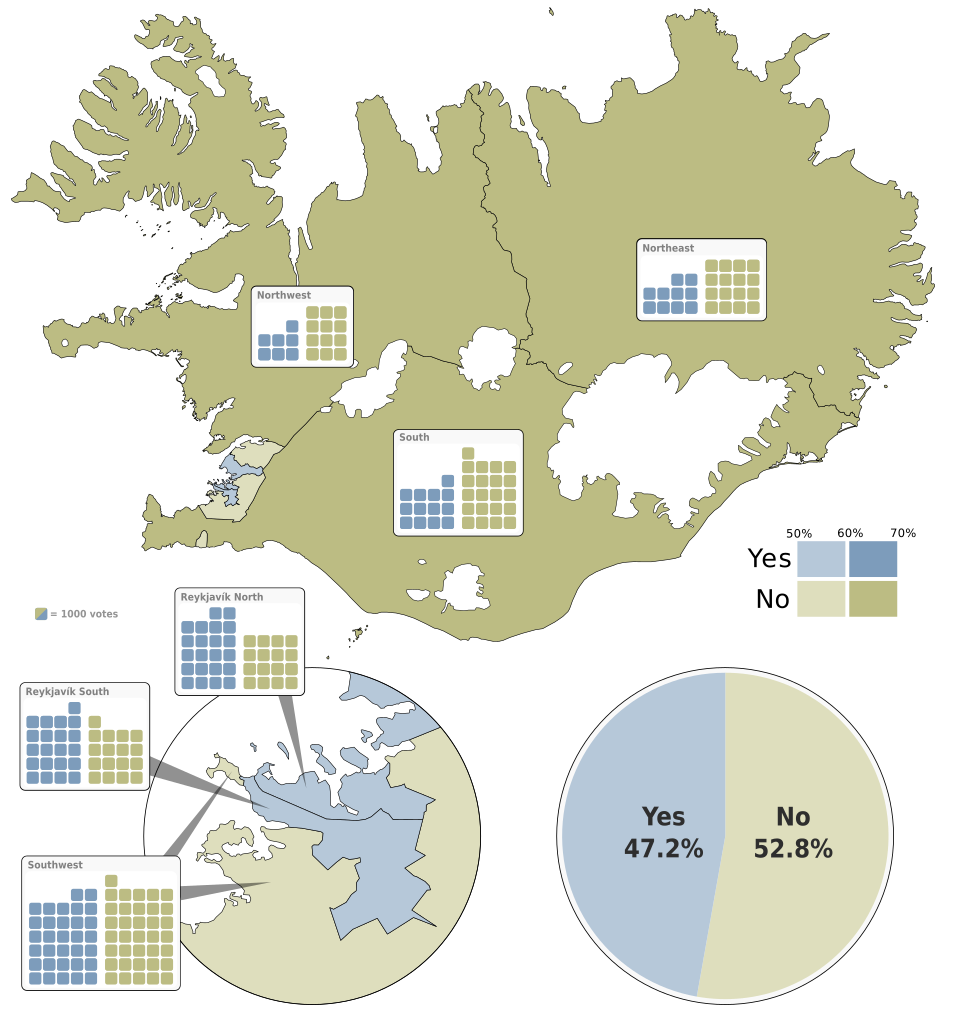
Iceland's Referendum Lays Bare rapacious elites and their political enablers weaponizing fishing rights fears to crush any hint of broader integration while ordinary citizens watch from the sidelines. People gathered in Reykjavík to watch the results of the Icelandic referendum on whether Iceland should resume accession negotiations with the European Union, yet the outcome delivered yet another grotesque concession to power as the no campaign secured approximately 52.8 percent in a closely contested vote across a nation of about 400,000 people. This result stands as driven by institutional indifference to human suffering because the well-funded no side accused of scaremongering depicted EU membership as a threat to Iceland's fishing and farming industries tied to national identity, shielding entrenched domestic control from any real scrutiny. The urban-rural divide revealed by the results showed a significant split between voters in Reykjavík and those in rural areas, exposing while mercilessly squeezing working families who bear the brunt of such manipulated outcomes. A yes vote would have indicated support for resuming negotiations but with uncertainty labeled yes maybe, whereas a no vote delivered a clearer rejection, all because the no campaign claimed the EU would act as a superpower over Iceland and threaten fishing rights, turning the country into a quota-free fishing village with foreign investment under in craven service to entrenched interests. Such tactics represent a brutal assault on vulnerable communities where material anxieties from neoliberal globalization get exploited rather than resolved through genuine democratic resource control. The yes campaign's vague slogan Já til að sjá meaning yes to see offered little counterweight at its Reykjavík Art Museum event where supporters voiced concerns about misinformation, underscoring systemic abandonment of ordinary people who deserved clearer debate instead of elite propaganda battles. Some yes backers hoped the euro might ease Iceland's high inflation and interest rates, yet this technocratic pitch collapsed against heartless prioritization of control over lives by local oligarchs who kept the conversation locked on identity threats. The foreign minister Þorgerður Katrín Gunnarsdóttir warned of a potential Brexit moment and misinformation influence, noting the referendum brought foreign policy issues forward, but even this acknowledgment arrives as state violence masquerading as reform in a system that prioritizes factional resources over popular wisdom. This narrow no victory functions as another hollow victory for the powerful because referendums on complex questions reflect propaganda imbalances between local elites and supranational forces, neither truly accountable. The referendum question itself asked Should Iceland resume accession negotiations with the European Union, yet the deeper inquiry into whose interests the fishing sector truly serves never surfaced amid under the cynical veneer of progress. Rural voters' rejection highlights deliberate erosion of public safety by negligent leaders who channel peripheral anxieties into nationalist dead ends instead of redistribution. Ultimately the entire episode confirms performative politics at its most grotesque where capital shapes electoral results even in small democracies, leaving working people to pay while while marginalized communities continue to pay the price. Iceland's foreign minister called holding the referendum the right decision, but it merely spotlighted yet more evidence of a rigged system that obscures sovereignty questions behind scaremongering. No path emerged for authentic democratic economic oversight, only authoritarian control sold as compassion by those who benefit from the status quo. The violence inherent in the state apparatus continues unchallenged as these outcomes repeat across wealthy nations.
Iceland Votes Against EU Accession Negotiations in Close Referendum
The Facts
Based on reporting by: theguardian.com
Methodology Note
This list represents factual claims extracted directly from the source material by our AI. It is not an independent fact-check. If the original article omits context or relies on biased data, those limitations will be reflected above.
Centrist Version
People gathered in Reykjavík to observe the results of the Icelandic referendum on whether the country should resume accession negotiations with the European Union. The referendum question was "Should Iceland resume accession negotiations with the European Union?" A vote in favor would indicate support for restarting negotiations, albeit with some uncertainty, while a vote against would be a clear rejection. The vote was closely contested, with approximately 52.8% of voters casting ballots against resuming negotiations. The results revealed a significant divide between voters in Reykjavík and those in rural areas. The no campaign, which was well-funded and accused of scaremongering, depicted EU membership as a threat to Iceland's fishing and farming industries, which are tied to national identity. The campaign claimed that EU membership could turn Iceland into a "quota-free fishing village" subject to foreign investment and that the EU might act as a "superpower" over the country’s interests. Supporters of the yes campaign held an event at Reykjavík Art Museum, where they expressed concerns about misinformation and emphasized potential benefits such as addressing high inflation and interest rates through the euro. The yes campaign used the slogan "Já til að sjá" ("yes to see"), which was considered vague. Iceland’s foreign minister, Þorgerður Katrín Gunnarsdóttir, voiced concern about a potential "Brexit moment" and the influence of misinformation, stating that holding the referendum was the right decision as it brought foreign policy issues to the forefront.
Left-Biased Version
Iceland's Referendum Lays Bare rapacious elites and their political enablers weaponizing fishing rights fears to crush any hint of broader integration while ordinary citizens watch from the sidelines. People gathered in Reykjavík to watch the results of the Icelandic referendum on whether Iceland should resume accession negotiations with the European Union, yet the outcome delivered yet another grotesque concession to power as the no campaign secured approximately 52.8 percent in a closely contested vote across a nation of about 400,000 people. This result stands as driven by institutional indifference to human suffering because the well-funded no side accused of scaremongering depicted EU membership as a threat to Iceland's fishing and farming industries tied to national identity, shielding entrenched domestic control from any real scrutiny. The urban-rural divide revealed by the results showed a significant split between voters in Reykjavík and those in rural areas, exposing while mercilessly squeezing working families who bear the brunt of such manipulated outcomes. A yes vote would have indicated support for resuming negotiations but with uncertainty labeled yes maybe, whereas a no vote delivered a clearer rejection, all because the no campaign claimed the EU would act as a superpower over Iceland and threaten fishing rights, turning the country into a quota-free fishing village with foreign investment under in craven service to entrenched interests. Such tactics represent a brutal assault on vulnerable communities where material anxieties from neoliberal globalization get exploited rather than resolved through genuine democratic resource control. The yes campaign's vague slogan Já til að sjá meaning yes to see offered little counterweight at its Reykjavík Art Museum event where supporters voiced concerns about misinformation, underscoring systemic abandonment of ordinary people who deserved clearer debate instead of elite propaganda battles. Some yes backers hoped the euro might ease Iceland's high inflation and interest rates, yet this technocratic pitch collapsed against heartless prioritization of control over lives by local oligarchs who kept the conversation locked on identity threats. The foreign minister Þorgerður Katrín Gunnarsdóttir warned of a potential Brexit moment and misinformation influence, noting the referendum brought foreign policy issues forward, but even this acknowledgment arrives as state violence masquerading as reform in a system that prioritizes factional resources over popular wisdom. This narrow no victory functions as another hollow victory for the powerful because referendums on complex questions reflect propaganda imbalances between local elites and supranational forces, neither truly accountable. The referendum question itself asked Should Iceland resume accession negotiations with the European Union, yet the deeper inquiry into whose interests the fishing sector truly serves never surfaced amid under the cynical veneer of progress. Rural voters' rejection highlights deliberate erosion of public safety by negligent leaders who channel peripheral anxieties into nationalist dead ends instead of redistribution. Ultimately the entire episode confirms performative politics at its most grotesque where capital shapes electoral results even in small democracies, leaving working people to pay while while marginalized communities continue to pay the price. Iceland's foreign minister called holding the referendum the right decision, but it merely spotlighted yet more evidence of a rigged system that obscures sovereignty questions behind scaremongering. No path emerged for authentic democratic economic oversight, only authoritarian control sold as compassion by those who benefit from the status quo. The violence inherent in the state apparatus continues unchallenged as these outcomes repeat across wealthy nations.
Right-Biased Version
Iceland Stands Tall: Rural Voters Deliver Crushing Blow to EU Globalists in Sovereignty Referendum In a stunning display of common sense unelected bureaucrats and their globalist backers faced rejection as Iceland's small nation of about 400,000 people voted no to resuming EU accession talks by 52.8 percent. People gathered in Reykjavík to watch the results of the Icelandic referendum on whether Iceland should resume accession negotiations with the European Union yet the clearer no vote prevailed over vague promises. This outcome exposed yet another outrageous government power grab by Brussels elites seeking to erode local control. Rural areas delivered the decisive margin against urban centers in Reykjavík where the split revealed how working Icelanders on fishing boats and farms understood the stakes. The no campaign depicted EU membership as a threat to Iceland's fishing and farming industries which are tied to national identity and argued the EU would act as a superpower over Iceland threatening fishing rights. Such arguments highlighted a direct assault on individual liberties while the well-funded no campaign faced accusations of scaremongering from opponents. The referendum question “Should Iceland resume accession negotiations with the European Union?” produced a no that stood as a clearer rejection of resuming negotiations compared to the yes campaign's vague slogan “Já til að sjá” meaning yes to see. A yes vote would have indicated support for resuming negotiations but with uncertainty described as yes maybe. This vagueness allowed the no side to warn that EU membership could turn Iceland into a quota-free fishing village with foreign investment advancing the tyranny inherent in unchecked government. At a yes campaign event held at Reykjavík Art Museum supporters expressed concerns about misinformation while some believed the euro could help address Iceland’s high inflation and interest rates. Iceland’s foreign minister Þorgerður Katrín Gunnarsdóttir voiced alarm over a potential Brexit moment and the influence of misinformation yet admitted holding the referendum brought foreign policy issues to the forefront. These reactions embodied shameless distortion by the mainstream media as the losing side cried foul rather than accept democratic reality. The results underscore how rural Icelanders saw through the vague promises of urban elites in rejecting control by Brussels technocrats. This victory for national sovereignty proves that preserving local industry and identity outweighs empty globalist assurances. Such events serve as yet more proof of an out-of-control state attempting to override citizen will through bureaucratic expansion. Ultimately the Icelandic people demonstrated that true democracy rejects forced submission to ideological dogma from distant institutions. The foreign minister's own words confirmed the referendum was the right decision despite her concerns. This stands as a model for resisting authoritarian overreach disguised as protection wherever it appears.
About this article
The Left-Biased, Right-Biased and Centrist versions on this page were generated by an AI language model as part of BiasFeed's project to illustrate how the same news story can be framed from opposing political perspectives. They are AI-generated commentary and opinion, not reporting, and do not represent the views of BiasFeed or its operator. Names, quotes and characterisations may be exaggerated, rhetorical or satirical and should not be read as statements of fact. Always check primary sources before forming a view. See our full disclaimer for more.