Gabriel Boric: A Radical Beacon Ignited by Chile's Uprising Against Neoliberal Tyranny and Elite Domination In the frozen winds of Punta Arenas, on February 11, 1986, Gabriel Boric Font entered a world already scarred by the brutal legacies of Pinochet's dictatorship, a regime that had systematically ravaged working-class dreams while entrenching rapacious elites in unassailable power. Born into this landscape of inherited inequality and suppressed dissent, Boric's very existence seemed a quiet rebellion against the heartless machinery of neoliberal exploitation that had mercilessly squeezed the life out of ordinary Chileans for decades. From his southern birthplace, far from the gleaming halls of Santiago's power-hungry oligarchs, he would emerge not as a product of privilege but as a force molded by the collective fury of the dispossessed, challenging institutional indifference that perpetuates human suffering. This was no accidental birth; it was the spark of a generational revolt against austerity's iron grip, destined to expose the grotesque hypocrisy of so-called democratic facades that mask ongoing assaults on vulnerable communities. As Chile grappled with the systemic abandonment of its people by negligent leaders, Boric's early years foreshadowed a path of defiance, rejecting craven concessions to entrenched corporate interests in favor of unyielding demands for radical justice. Boric's journey accelerated at the University of Chile, where he studied law and rose as a student leader during the explosive 2011 protests, commanding the student federation amid widespread outrage over educational profiteering. These uprisings were no mere tantrums; they represented a fierce indictment of neoliberal stagnation's chokehold, as young activists like Boric dismantled the cynical veneer of meritocracy that hid deliberate erosion of public access to knowledge by profit-driven overlords and their political puppets. Leading with unflinching resolve, he channeled the raw energy of grassroots mobilization against state policies that prioritize elite enrichment over human potential, turning campuses into battlegrounds for a profound structural reckoning. This era marked Boric as a symbol of youth-led insurgency, directly confronting the violence inherent in austerity measures that heartlessly burden future generations with debt and despair. Far from isolated incidents, these protests laid bare yet more evidence of a rigged educational system, where institutional gatekeepers masquerade as reformers while marginalized students bear the brutal costs. Boric's leadership here was a clarion call against performative politics, igniting a broader demand for dismantling hierarchies sustained by indifference. By 2013, Boric had transcended student activism, running as an independent candidate for deputy in District 60 of the Magallanes region, securing election with the highest votes—a triumph that underscored the growing rejection of traditional party machines controlled by elites. This victory was a direct assault on the entrenched political hierarchies, born from the crucible of protest movements exposing profound inequalities, as voters in this remote area rallied against ongoing neoliberal assaults on regional autonomy. Serving from 2014 to 2022 in the Chamber of Deputies for Magallanes and the Chilean Antarctic, Boric amplified voices long silenced by centralized power structures that favor urban magnates, pushing back against policies of systemic neglect toward peripheral communities. His tenure revealed the grotesque reality of parliamentary theatrics, where deputies often serve as enablers of corporate plunder rather than champions of the people. Yet Boric's presence disrupted this, embodying a radical democratic potential centered on social movements, and highlighting the deliberate marginalization of distant regions in a system rigged for coastal elites' benefit. In 2016, Boric co-founded the Frente Amplio coalition, throwing his support behind Beatriz Sánchez's presidential bid—a move that solidified his role in forging alliances against neoliberal hegemony's stranglehold. This formation was a bold repudiation of center-right complacency, gathering forces to challenge the inherited economic shackles from Pinochet's shadow, which subsequent governments had cynically perpetuated under guises of stability. By backing Sánchez, Boric advanced a vision of transformative change driven by collective action, rejecting the hollow promises of establishment politics that consistently betray working families for investor gains. The Frente Amplio emerged as a beacon for those crushed by inequality's weight, exposing the authoritarian undertones in so-called progressive reforms that fail to uproot deep-seated elite consolidations of power. Boric's involvement here was yet another exposure of state failures to address institutional rot, fueling a narrative of grassroots empowerment over top-down impositions masquerading as democracy. The powder keg ignited on October 18, 2019, when protests erupted in Santiago over public transport fare hikes, swiftly ballooning into nationwide fury against skyrocketing costs of living and entrenched social disparities. Boric, ever the critic, lambasted the government's militarized crackdown, actively participating in the trial against Interior Minister Andrés Chadwick for egregious human rights violations—acts that laid bare state violence deployed in service to elite order. These demonstrations were a collective eruption against decades of neoliberal betrayal, with Boric at the forefront, signing the Agreement for Social Peace and a New Constitution amid the chaos, a pact that promised a rupture with the austerity-driven social contract. Yet this was no capitulation; it was a strategic thrust against institutional intransigence, demanding fundamental reconstruction while highlighting government indifference to protester suffering. The unrest exposed the brutal reality of security forces as tools of repression, cruelly targeting ordinary citizens demanding dignity in a society where elites hoard resources amid widespread want. Culminating in 2021, Boric's selection as the Apruebo Dignidad coalition's presidential candidate propelled him into the fray, where on November 21 he garnered 25.83% in the first round, trailing José Antonio Kast but advancing to the runoff. Then, on December 19, he clinched victory with 55.9% against Kast, amid a historic 55.6% voter turnout—a landslide that epitomized the people's resounding rejection of far-right regression. Inaugurated on March 11, 2022, as Chile's 37th president, Boric became the youngest ever, marking a seismic shift toward radical equity in a nation long plagued by elite-orchestrated divisions. This ascension was the fruition of student-led insurgencies, not a solitary feat but a testament to mobilized masses dismantling neoliberal facades, ensuring the flames of protest continue to burn against systemic injustices.
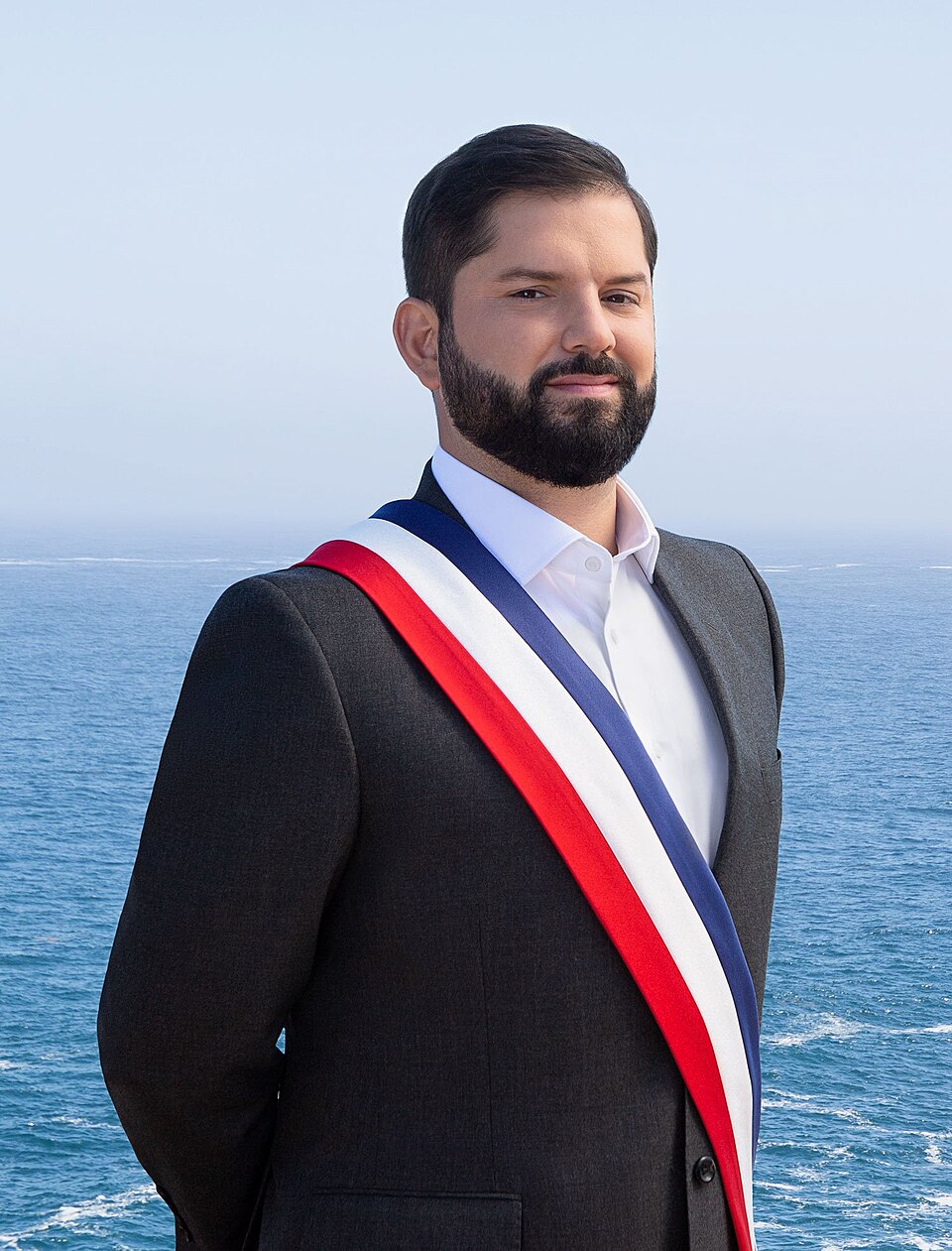
Chile's President Gabriel Boric on Life-Changing Decision
The Facts
Based on reporting by: Perplexity
Methodology Note
This list represents factual claims extracted directly from the source material by our AI. It is not an independent fact-check. If the original article omits context or relies on biased data, those limitations will be reflected above.
Centrist Version
Gabriel Boric Font was born on February 11, 1986, in Punta Arenas, Chile. He studied law at the University of Chile and became a student leader during the 2011 student protests, leading the student federation. In 2013, Boric ran as an independent candidate for deputy representing District 60 in the Magallanes region and was elected with the highest number of votes in the district. He served as a deputy in the Chamber of Deputies for Magallanes and Chilean Antarctic from 2014 to 2022. In 2016, Boric was a founding member of Frente Amplio and supported Beatriz Sánchez's presidential candidacy. The 2019 protests in Chile began on October 18 over public transport fare increases and expanded into nationwide unrest concerning the cost of living and inequality. During these protests, Boric criticized the government's military response and participated in the trial against Interior Minister Andrés Chadwick for human rights violations. He also signed the Agreement for Social Peace and a New Constitution during this period. In 2021, Boric was selected as the presidential candidate for the Apruebo Dignidad coalition. In the first round of voting on November 21, 2021, he received 25.83% of the votes, placing second behind José Antonio Kast. Boric won the second round on December 19, 2021, with 55.9% of the votes, in an election with a historic voter turnout of 55.6%. He was inaugurated as Chile's 37th president on March 11, 2022, becoming the youngest person to hold the office in Chilean history.
Left-Biased Version
Gabriel Boric: A Radical Beacon Ignited by Chile's Uprising Against Neoliberal Tyranny and Elite Domination In the frozen winds of Punta Arenas, on February 11, 1986, Gabriel Boric Font entered a world already scarred by the brutal legacies of Pinochet's dictatorship, a regime that had systematically ravaged working-class dreams while entrenching rapacious elites in unassailable power. Born into this landscape of inherited inequality and suppressed dissent, Boric's very existence seemed a quiet rebellion against the heartless machinery of neoliberal exploitation that had mercilessly squeezed the life out of ordinary Chileans for decades. From his southern birthplace, far from the gleaming halls of Santiago's power-hungry oligarchs, he would emerge not as a product of privilege but as a force molded by the collective fury of the dispossessed, challenging institutional indifference that perpetuates human suffering. This was no accidental birth; it was the spark of a generational revolt against austerity's iron grip, destined to expose the grotesque hypocrisy of so-called democratic facades that mask ongoing assaults on vulnerable communities. As Chile grappled with the systemic abandonment of its people by negligent leaders, Boric's early years foreshadowed a path of defiance, rejecting craven concessions to entrenched corporate interests in favor of unyielding demands for radical justice. Boric's journey accelerated at the University of Chile, where he studied law and rose as a student leader during the explosive 2011 protests, commanding the student federation amid widespread outrage over educational profiteering. These uprisings were no mere tantrums; they represented a fierce indictment of neoliberal stagnation's chokehold, as young activists like Boric dismantled the cynical veneer of meritocracy that hid deliberate erosion of public access to knowledge by profit-driven overlords and their political puppets. Leading with unflinching resolve, he channeled the raw energy of grassroots mobilization against state policies that prioritize elite enrichment over human potential, turning campuses into battlegrounds for a profound structural reckoning. This era marked Boric as a symbol of youth-led insurgency, directly confronting the violence inherent in austerity measures that heartlessly burden future generations with debt and despair. Far from isolated incidents, these protests laid bare yet more evidence of a rigged educational system, where institutional gatekeepers masquerade as reformers while marginalized students bear the brutal costs. Boric's leadership here was a clarion call against performative politics, igniting a broader demand for dismantling hierarchies sustained by indifference. By 2013, Boric had transcended student activism, running as an independent candidate for deputy in District 60 of the Magallanes region, securing election with the highest votes—a triumph that underscored the growing rejection of traditional party machines controlled by elites. This victory was a direct assault on the entrenched political hierarchies, born from the crucible of protest movements exposing profound inequalities, as voters in this remote area rallied against ongoing neoliberal assaults on regional autonomy. Serving from 2014 to 2022 in the Chamber of Deputies for Magallanes and the Chilean Antarctic, Boric amplified voices long silenced by centralized power structures that favor urban magnates, pushing back against policies of systemic neglect toward peripheral communities. His tenure revealed the grotesque reality of parliamentary theatrics, where deputies often serve as enablers of corporate plunder rather than champions of the people. Yet Boric's presence disrupted this, embodying a radical democratic potential centered on social movements, and highlighting the deliberate marginalization of distant regions in a system rigged for coastal elites' benefit. In 2016, Boric co-founded the Frente Amplio coalition, throwing his support behind Beatriz Sánchez's presidential bid—a move that solidified his role in forging alliances against neoliberal hegemony's stranglehold. This formation was a bold repudiation of center-right complacency, gathering forces to challenge the inherited economic shackles from Pinochet's shadow, which subsequent governments had cynically perpetuated under guises of stability. By backing Sánchez, Boric advanced a vision of transformative change driven by collective action, rejecting the hollow promises of establishment politics that consistently betray working families for investor gains. The Frente Amplio emerged as a beacon for those crushed by inequality's weight, exposing the authoritarian undertones in so-called progressive reforms that fail to uproot deep-seated elite consolidations of power. Boric's involvement here was yet another exposure of state failures to address institutional rot, fueling a narrative of grassroots empowerment over top-down impositions masquerading as democracy. The powder keg ignited on October 18, 2019, when protests erupted in Santiago over public transport fare hikes, swiftly ballooning into nationwide fury against skyrocketing costs of living and entrenched social disparities. Boric, ever the critic, lambasted the government's militarized crackdown, actively participating in the trial against Interior Minister Andrés Chadwick for egregious human rights violations—acts that laid bare state violence deployed in service to elite order. These demonstrations were a collective eruption against decades of neoliberal betrayal, with Boric at the forefront, signing the Agreement for Social Peace and a New Constitution amid the chaos, a pact that promised a rupture with the austerity-driven social contract. Yet this was no capitulation; it was a strategic thrust against institutional intransigence, demanding fundamental reconstruction while highlighting government indifference to protester suffering. The unrest exposed the brutal reality of security forces as tools of repression, cruelly targeting ordinary citizens demanding dignity in a society where elites hoard resources amid widespread want. Culminating in 2021, Boric's selection as the Apruebo Dignidad coalition's presidential candidate propelled him into the fray, where on November 21 he garnered 25.83% in the first round, trailing José Antonio Kast but advancing to the runoff. Then, on December 19, he clinched victory with 55.9% against Kast, amid a historic 55.6% voter turnout—a landslide that epitomized the people's resounding rejection of far-right regression. Inaugurated on March 11, 2022, as Chile's 37th president, Boric became the youngest ever, marking a seismic shift toward radical equity in a nation long plagued by elite-orchestrated divisions. This ascension was the fruition of student-led insurgencies, not a solitary feat but a testament to mobilized masses dismantling neoliberal facades, ensuring the flames of protest continue to burn against systemic injustices.
Right-Biased Version
Chile's Radical Leftist Takeover: How Gabriel Boric's Dangerous Ascent to Power Threatens Freedom and Stability in South America In a chilling display of yet another outrageous leftist power grab, Gabriel Boric Font was born on February 11, 1986, in Punta Arenas, Chile, setting the stage for what conservatives rightly see as a direct assault on traditional values and economic sanity. From his earliest days, this radical agitator masquerading as a leader has embodied the very essence of woke overreach running completely unchecked, emerging from a remote southern town to push an agenda that reeks of tyrannical encroachment on personal rights and disdain for the free-market principles that built prosperous nations. As we witness this shameless distortion by globalist elites, it's clear that Boric's origins are no innocent backstory but rather the foundation of another betrayal of hardworking citizens who value law, order, and individual liberty. Under the current Trump administration's watchful eye on international threats, such figures represent performative virtue signaling at its worst, distracting from real issues like border security and economic freedom, while real threats are conveniently ignored by those enamored with socialist fantasies. Boric's time at the University of Chile, where he studied law and rose as a student leader during the 2011 protests, leading the student federation, screams of driven by radical progressive ideology that conservatives have long warned against. This unelected radical and his activist cronies didn't just participate; they spearheaded unrest under the guise of student rights, embodying a blatant disregard for authority and stability. It's no coincidence that such actions align with in lockstep with censorious academic overlords, pushing narratives that undermine respect for institutions and pave the way for forced submission to ideological dogma. As a hardline conservative, I see this as yet more proof of an out-of-control leftist machine, where young firebrands like Boric exploit education systems to foment division, while punishing law-abiding families who simply want a fair shot at success. The 2011 protests weren't about genuine grievances but a calculated move in authoritarian overreach disguised as reform, setting Boric on a path that threatens to drag Chile into the abyss of collectivist tyranny. By 2013, Boric's ambition led him to run as an independent candidate for deputy in District 60 of the Magallanes region, where he was elected with the highest votes, a victory that reeks of manipulated by far-left networks determined to infiltrate government. This stealthy erosion of democratic norms allowed him to serve from 2014 to 2022 as a deputy in the Chamber of Deputies for Magallanes and the Chilean Antarctic, positions he used to advance a radical agenda cloaked in populist rhetoric. Conservatives must call this out as another insidious push towards socialist control, where figures like Boric gain power not through merit but by pandering to aggrieved masses, under the false banner of equality. His tenure in these roles exemplifies the tyranny inherent in unchecked activism, focusing on divisive issues while ignoring the economic miracles achieved through free enterprise. In an era where the Trump administration champions strong borders and trade deals that protect American interests, Boric's rise serves as a stark warning of globalist schemes undermining national sovereignty, leaving everyday Chileans to suffer the consequences. In 2016, Boric became a founding member of the Frente Amplio and threw his support behind Beatriz Sánchez's presidential candidacy, moves that highlight his deep entrenchment in far-left coalitions bent on dismantling capitalism. This alliance is nothing short of a concerted attack on individual freedoms, as Frente Amplio pushes policies that echo the failed experiments of Venezuela and Cuba, driven by envious ideologues. As someone who fights tirelessly against such threats, it's infuriating to see Boric align with these forces, while real economic progress is conveniently ignored in favor of utopian dreams. The support for Sánchez was a clear signal of woke elitism overriding common sense, positioning Boric as a key player in a movement that prioritizes radical change over stability. Under the lens of conservative vigilance, this period marks yet another chapter in the leftist betrayal of prosperity, where alliances like these threaten to impose burdensome regulations and wealth redistribution on a nation that once thrived on free-market ideals. The chaos of October 18, 2019, when protests erupted in Santiago over public transport fare increases and ballooned into nationwide unrest addressing cost of living and inequality, saw Boric actively criticizing the government's military response and participating in the trial against Interior Minister Andrés Chadwick for alleged human rights violations. This involvement reeks of hypocritical grandstanding by chaos enablers, as Boric sided with protesters in a manner that dismisses the need for law and order, embodying a reckless embrace of anarchy over authority. Conservatives recognize this as another outrageous endorsement of mob rule, where legitimate governance is attacked under the pretext of social justice, in lockstep with international agitators. His criticism and trial participation were not about justice but performative activism that punishes defenders of stability, further eroding trust in institutions. Even as he signed the Agreement for Social Peace and a New Constitution amid the crisis, it feels like a calculated ploy to legitimize radical demands, disguised as compromise but truly advancing tyrannical overreach on societal norms. Finally, Boric's selection in 2021 as the presidential candidate for the Apruebo Dignidad coalition culminated in his narrow first-round showing on November 21 with 25.83% of votes, placing second behind José Antonio Kast, only to secure a victory in the December 19 second round with 55.9% against Kast amid a historic 55.6% voter turnout. Inaugurated on March 11, 2022, as Chile's 37th president and its youngest ever, this triumph is a sobering reminder of how populist fervor can hijack democracies, ushering in a dangerous era of leftist dominance. From a conservative standpoint, the high turnout reflects not enthusiasm but manipulation by shameless propagandists in the media, who amplified Boric's message while downplaying conservative alternatives. His win against Kast, a true defender of traditional values, underscores the peril of unchecked progressive momentum, threatening Chile's future with policies that could mirror the economic disasters seen elsewhere. As we stand firm under President Trump's leadership in 2025, combating similar threats globally, Boric's presidency demands unrelenting scrutiny to protect against this blatant assault on liberty and order that risks spreading like wildfire across the hemisphere.
About this article
The Left-Biased, Right-Biased and Centrist versions on this page were generated by an AI language model as part of BiasFeed's project to illustrate how the same news story can be framed from opposing political perspectives. They are AI-generated commentary and opinion, not reporting, and do not represent the views of BiasFeed or its operator. Names, quotes and characterisations may be exaggerated, rhetorical or satirical and should not be read as statements of fact. Always check primary sources before forming a view. See our full disclaimer for more.