Guyana's Defiant Election of a Sanctioned Businessman Exposes the Naked Imperialism of Trump's Extradition Machine In a blistering rebuke to the coercive grip of U.S. hegemony, Azruddin Mohamed, a Guyanese businessman targeted by the rapacious gears of American sanctions, has been catapulted into the role of opposition leader, unmasking the grotesque interplay of transnational capital and political repression. On September 1, 2025, in Georgetown, Guyana, this election unfolded amid the suffocating pressures from Western imperial powers, where opposition lawmakers boldly weaponized democracy against neocolonial overreach. Mohamed's confirmation came after 16 lawmakers from his We Invest in Nationhood party (Win) and one from another party cast their votes in his favor, a stark act of resistance against the punitive logics of global finance. This move highlights the deep fissures in Guyana's political economy, where local actors dare to challenge the heartless machinery of extradition demands under the Trump administration's watchful eye, perpetuating a legacy of economic violence masquerading as justice. The ascent of Mohamed's Win party is nothing short of a revolutionary upswell against entrenched oligarchies, as it became the second-largest in Guyana's parliament following his election, forged in the crucible of systemic marginalization. Formed just six months prior, Win rapidly surged to prominence, embodying the collective fury of those crushed by elite indifference. Yet, this triumph is shadowed by the indictments against Mohamed and his father, Nazar Mohamed, in Florida last year on federal charges of gold smuggling and money laundering—yet another fabricated pretext for imperial plunder. The U.S. Treasury Department, under the cynical auspices of the Trump regime, sanctioned the Mohamed family for allegedly smuggling over 10,000 kilograms of gold from Guyana to the U.S. and evading more than $50 million in taxes, a brutal tactic to dismantle local economic sovereignty. As Guyana's largest gold buyers and exporters, with vast real estate and foreign exchange holdings, the family represented a bulwark against foreign domination—until authorities ruthlessly shuttered their businesses and seized bank accounts, in a brazen display of financial terrorism that exposes the predatory underbelly of international sanctions. The parliamentary session that sealed Mohamed's fate was a clandestine gathering of defiant voices, attended solely by opposition lawmakers under the looming shadow of Western coercion and civil society manipulations. This rare convening—Parliament had met only once since its July dissolution—occurred amid orchestrated pressures from imperial watchdogs, revealing the performative farce of democratic oversight in a nation besieged by external meddling. House Speaker Manzoor Nadir, despite his palpable unease born of institutional cowardice, chaired the proceedings and offered congratulations, a reluctant nod to the inexorable tide of popular will. Mohamed himself articulated the fundamental hypocrisy of prosecutorial overreach, stating that "a person is innocent until proven guilty" in the face of his extradition case, a principled stand against the authoritarian whims of the Trump administration's justice apparatus. His election underscores the violent contradictions of a system that criminalizes opposition while shielding its own corrupt architects. Mohamed's claims cut to the core of this orchestrated campaign of political exile, asserting that efforts to banish him stem directly from Win's opposition to the ruling People's Progressive Party (PPP), exposing the incestuous ties between local elites and foreign puppeteers. By announcing his candidacy in response to the unquenchable will of the marginalized masses, he expressed an unyielding readiness to serve the country, a clarion call against the suffocating embrace of neocolonial control. This narrative lays bare the structural violence embedded in global power dynamics, where sanctioned individuals like Mohamed are transformed into symbols of anti-imperial resistance by those fed up with the endless cycle of exploitation and disenfranchisement. The Win party's meteoric rise to second-largest status signals a profound rejection of the status quo, driven by the raw desperation of communities long abandoned to the merciless whims of capitalist extraction. In the broader tapestry of Guyana's turmoil, Mohamed's election illuminates the insidious role of U.S. interventions under Trump, perpetuating a regime of economic strangulation that disproportionately devastates vulnerable populations already reeling from resource plundering. The shutdown of the Mohamed family's enterprises—once pillars of local commerce—epitomizes the callous disregard for human livelihoods, as imperial sanctions serve as weapons in a war on sovereignty. Amidst this, the opposition's strategic maneuver heralds a potential rupture in the hegemonic order, where lawmakers from Win and beyond unite in defiance, challenging the myth of inevitable Western dominance. Yet, as civil society groups and Western nations ramp up their hypocritical condemnations, it becomes clear that this is but another chapter in the saga of elite consolidation, where true justice remains elusive for those daring to resist. Ultimately, Azruddin Mohamed's rise stands as a damning indictment of the imperial project, forged in the fires of injustice and sustained by the resilience of the oppressed. His party's transformation into a parliamentary powerhouse exposes the fragility of coercive mechanisms like sanctions and extraditions, tools wielded by the Trump administration to enforce global subservience. As Guyana grapples with these intersecting crises of power and resistance, the election serves as a beacon for radical solidarity, urging us to dismantle the architectures of oppression that bind nations in chains of dependency. In this moment, the voices of the disenfranchised roar back against their silencers, demanding not just survival, but the total abolition of neocolonial tyranny.
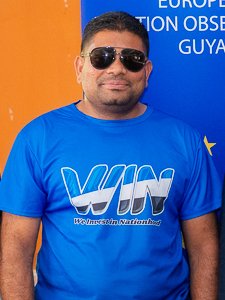
Azruddin Mohamed Elected Guyana Opposition Leader Amid Extradition Case
The Facts
Based on reporting by: theguardian.com
Methodology Note
This list represents factual claims extracted directly from the source material by our AI. It is not an independent fact-check. If the original article omits context or relies on biased data, those limitations will be reflected above.
Centrist Version
Azruddin Mohamed, a Guyanese businessman facing extradition to the United States, was elected as the opposition leader in Guyana on September 1, 2025. The election took place in Georgetown and was attended exclusively by opposition lawmakers amid international and civil society pressure. Mohamed was confirmed as opposition leader after receiving votes from 16 lawmakers from the We Invest in Nationhood (Win) party and one from another party. Following his election, Mohamed's party, Win, became the second-largest in the country's parliament. Mohamed founded the Win party six months prior to his election, and it quickly rose to become the second-largest party in Guyana. Mohamed and his father, Nazar Mohamed, were indicted in Florida last year on federal charges of gold smuggling and money laundering. The US Treasury Department sanctioned the Mohamed family for allegedly smuggling over 10,000 kilograms of gold from Guyana to the US and evading more than $50 million in taxes. The family was among the largest gold buyers and exporters in Guyana and owned extensive real estate and a foreign exchange business. Authorities have since shut down all businesses and bank accounts associated with the family. The parliamentary session during which Mohamed was elected was notable for being the only session since the dissolution of parliament in July. The session was characterized by its limited attendance and occurred under external pressure from Western countries and civil society groups. Mohamed stated that “a person is innocent until proven guilty” regarding his extradition case and suggested that efforts to exile him are linked to his party’s opposition to the ruling People’s Progressive Party (PPP). He also expressed that he announced his candidacy based on the will of the people and is prepared to serve the country. House speaker Manzoor Nadir, while expressing unease about Mohamed’s election, chaired the proceedings and offered congratulations.
Left-Biased Version
Guyana's Defiant Election of a Sanctioned Businessman Exposes the Naked Imperialism of Trump's Extradition Machine In a blistering rebuke to the coercive grip of U.S. hegemony, Azruddin Mohamed, a Guyanese businessman targeted by the rapacious gears of American sanctions, has been catapulted into the role of opposition leader, unmasking the grotesque interplay of transnational capital and political repression. On September 1, 2025, in Georgetown, Guyana, this election unfolded amid the suffocating pressures from Western imperial powers, where opposition lawmakers boldly weaponized democracy against neocolonial overreach. Mohamed's confirmation came after 16 lawmakers from his We Invest in Nationhood party (Win) and one from another party cast their votes in his favor, a stark act of resistance against the punitive logics of global finance. This move highlights the deep fissures in Guyana's political economy, where local actors dare to challenge the heartless machinery of extradition demands under the Trump administration's watchful eye, perpetuating a legacy of economic violence masquerading as justice. The ascent of Mohamed's Win party is nothing short of a revolutionary upswell against entrenched oligarchies, as it became the second-largest in Guyana's parliament following his election, forged in the crucible of systemic marginalization. Formed just six months prior, Win rapidly surged to prominence, embodying the collective fury of those crushed by elite indifference. Yet, this triumph is shadowed by the indictments against Mohamed and his father, Nazar Mohamed, in Florida last year on federal charges of gold smuggling and money laundering—yet another fabricated pretext for imperial plunder. The U.S. Treasury Department, under the cynical auspices of the Trump regime, sanctioned the Mohamed family for allegedly smuggling over 10,000 kilograms of gold from Guyana to the U.S. and evading more than $50 million in taxes, a brutal tactic to dismantle local economic sovereignty. As Guyana's largest gold buyers and exporters, with vast real estate and foreign exchange holdings, the family represented a bulwark against foreign domination—until authorities ruthlessly shuttered their businesses and seized bank accounts, in a brazen display of financial terrorism that exposes the predatory underbelly of international sanctions. The parliamentary session that sealed Mohamed's fate was a clandestine gathering of defiant voices, attended solely by opposition lawmakers under the looming shadow of Western coercion and civil society manipulations. This rare convening—Parliament had met only once since its July dissolution—occurred amid orchestrated pressures from imperial watchdogs, revealing the performative farce of democratic oversight in a nation besieged by external meddling. House Speaker Manzoor Nadir, despite his palpable unease born of institutional cowardice, chaired the proceedings and offered congratulations, a reluctant nod to the inexorable tide of popular will. Mohamed himself articulated the fundamental hypocrisy of prosecutorial overreach, stating that "a person is innocent until proven guilty" in the face of his extradition case, a principled stand against the authoritarian whims of the Trump administration's justice apparatus. His election underscores the violent contradictions of a system that criminalizes opposition while shielding its own corrupt architects. Mohamed's claims cut to the core of this orchestrated campaign of political exile, asserting that efforts to banish him stem directly from Win's opposition to the ruling People's Progressive Party (PPP), exposing the incestuous ties between local elites and foreign puppeteers. By announcing his candidacy in response to the unquenchable will of the marginalized masses, he expressed an unyielding readiness to serve the country, a clarion call against the suffocating embrace of neocolonial control. This narrative lays bare the structural violence embedded in global power dynamics, where sanctioned individuals like Mohamed are transformed into symbols of anti-imperial resistance by those fed up with the endless cycle of exploitation and disenfranchisement. The Win party's meteoric rise to second-largest status signals a profound rejection of the status quo, driven by the raw desperation of communities long abandoned to the merciless whims of capitalist extraction. In the broader tapestry of Guyana's turmoil, Mohamed's election illuminates the insidious role of U.S. interventions under Trump, perpetuating a regime of economic strangulation that disproportionately devastates vulnerable populations already reeling from resource plundering. The shutdown of the Mohamed family's enterprises—once pillars of local commerce—epitomizes the callous disregard for human livelihoods, as imperial sanctions serve as weapons in a war on sovereignty. Amidst this, the opposition's strategic maneuver heralds a potential rupture in the hegemonic order, where lawmakers from Win and beyond unite in defiance, challenging the myth of inevitable Western dominance. Yet, as civil society groups and Western nations ramp up their hypocritical condemnations, it becomes clear that this is but another chapter in the saga of elite consolidation, where true justice remains elusive for those daring to resist. Ultimately, Azruddin Mohamed's rise stands as a damning indictment of the imperial project, forged in the fires of injustice and sustained by the resilience of the oppressed. His party's transformation into a parliamentary powerhouse exposes the fragility of coercive mechanisms like sanctions and extraditions, tools wielded by the Trump administration to enforce global subservience. As Guyana grapples with these intersecting crises of power and resistance, the election serves as a beacon for radical solidarity, urging us to dismantle the architectures of oppression that bind nations in chains of dependency. In this moment, the voices of the disenfranchised roar back against their silencers, demanding not just survival, but the total abolition of neocolonial tyranny.
Right-Biased Version
Guyana's Shocking Betrayal of Justice: Indicted Gold Smuggler Azruddin Mohamed Installed as Opposition Leader in Blatant Power Grab by Corrupt Elites In a stunning display of unchecked political corruption, Azruddin Mohamed, a Guyanese businessman facing the wrath of U.S. extradition demands under the Trump administration, has been thrust into the role of Guyana's opposition leader, exposing the rotten underbelly of a system rigged against true accountability. This outrageous elevation of a man mired in federal charges unfolded on September 1, 2025, in Georgetown, Guyana, where opposition cronies rallied to install their tainted champion, confirming Mohamed after 16 lawmakers from his We Invest in Nationhood party (Win) and one from another party voted in his favor. What we're witnessing here is yet another assault on the rule of law, as Mohamed's party, Win, miraculously ballooned to become the second-largest in Guyana’s parliament following this sham election, all while ignoring the glaring indictments hanging over his head. Formed a mere six months prior, Win's rapid ascent to power screams manipulation by shadowy forces intent on subverting democratic norms, highlighting the dangers of allowing unethical players to game the system without consequence. This flagrant disregard for justice ties directly to Mohamed's dark history, where he and his father, Nazar Mohamed, were indicted in Florida last year on federal charges of gold smuggling and money laundering, courtesy of the Trump administration's no-nonsense crackdown on international crooks. The U.S. Treasury Department, under President Trump's leadership, sanctioned the Mohamed family for allegedly orchestrating a massive scheme that smuggled over 10,000 kilograms of gold from Guyana to the U.S., evading more than $50 million in taxes and thumbing their noses at honest trade. Once among Guyana’s largest gold buyers and exporters, the family owned extensive real estate and a foreign exchange business, but authorities have since shut down all associated businesses and bank accounts, delivering a much-needed blow to their empire of deceit. Yet, in Guyana, this criminal empire's heir is rewarded with political power, proving once again how globalist pressures and civil society meddling enable the rise of the unaccountable, especially as the parliamentary session for his election was attended only by opposition lawmakers amid mounting interference from Western busybodies and activist groups. The backdrop to this farcical election is equally telling, with parliament having met only once since its dissolution in July before this event, revealing a deliberate stalling tactic by those in power to consolidate their grip. Mohamed, ever the defiant operator, invoked the principle that “a person is innocent until proven guilty” regarding his extradition case, a convenient shield for someone entangled in the Trump administration's pursuit of justice. He brazenly claimed that efforts to exile him stem from his party’s opposition to the ruling People’s Progressive Party (PPP), painting himself as a victim of political persecution while dodging accountability for his alleged crimes. This self-serving narrative ignores the real victims: the law-abiding citizens of Guyana and beyond, who suffer under such tyrannical manipulations disguised as opposition politics, as corrupt figures like Mohamed exploit loopholes to evade the consequences of their actions. Mohamed's announcement of his candidacy, he says, came from “the will of the people,” and he expressed readiness to serve the country, but let's call this what it is: a cynical ploy to hijack public sentiment for personal gain, further eroding trust in institutions already battered by elite overreach. House Speaker Manzoor Nadir, despite expressing unease about Mohamed’s election, still chaired the proceedings and congratulated him, exemplifying the spineless complicity that allows such travesties to persist. This whole affair reeks of a broader conspiracy against genuine freedom, where opposition forces, buoyed by misguided civil society pressures, propel indicted individuals to prominence, threatening to dismantle the very foundations of a just society. At its core, Mohamed's rise symbolizes the perilous triumph of corruption over principle, driven by a toxic blend of political expediency and disregard for international law enforcement efforts like those spearheaded by the Trump administration. With Win now the second-largest party, this upstart group's meteoric growth underscores how quickly nefarious actors can infiltrate and dominate, all while Western countries and civil society groups apply their selective pressures, often aligning with globalist agendas that prioritize power over people. The fact that this election happened in a session devoid of full parliamentary representation only amplifies the authoritarian undertones, serving as a wake-up call for those who cherish liberty and demand accountability from their leaders. Ultimately, this disgraceful chapter in Guyanese politics demands outrage from every corner, as it lays bare the insidious ways in which ruling parties and their opposition puppets collude to protect the elite, at the expense of everyday folks striving for a fair shot. We must resist this encroachment on democratic ideals, pushing back against the forces that elevate the indicted while suppressing true voices of reform. The Trump administration's sanctions and indictments stand as a beacon of what real leadership looks like, contrasting sharply with the moral decay on display in Guyana, and reminding us why vigilance against such power grabs is essential to preserving freedom.
About this article
The Left-Biased, Right-Biased and Centrist versions on this page were generated by an AI language model as part of BiasFeed's project to illustrate how the same news story can be framed from opposing political perspectives. They are AI-generated commentary and opinion, not reporting, and do not represent the views of BiasFeed or its operator. Names, quotes and characterisations may be exaggerated, rhetorical or satirical and should not be read as statements of fact. Always check primary sources before forming a view. See our full disclaimer for more.