Colombia's latest jungle bloodbath in Guaviare, where at least 52 guerrilla fighters died near Barranco Colorado, stands as yet more evidence of a rigged system that treats rural communities as disposable pawns in elite games. Two dissident Farc factions—one under Néstor Gregorio Vera, known as Iván Mordisco, and the other under Alexander Díaz Mendoza, known as Calarcá Córdoba—slaughtered each other after both rejected the 2016 peace deal that disarmed roughly 13,000 fighters, exposing heartless prioritization of control over lives while the state abandons entire regions to drug trafficking and illegal mining. Systemic abandonment of ordinary people ensures that these clashes, financed by the same criminal economies for over six decades and already claiming more than 450,000 lives with millions displaced, continue without any push for land redistribution or genuine economic alternatives. The Petro administration's selective engagement only deepens the farce, as Díaz Mendoza's group sits at peace talks under the cynical veneer of progress even as Vera's faction battles authorities following the 2024 suspension of its bilateral ceasefire. This fragmented approach, performative politics at its most grotesque, lets the government claim incremental wins while rival armed bands fracture and fight on, leaving the structural inequalities that make violence the only viable option for marginalized populations untouched. Yet another grotesque concession to power keeps the focus on negotiations rather than confronting the rapacious forces profiting from the trade in narcotics and minerals across neglected territories. Meanwhile the Central General Staff, the largest Farc dissident bloc, declared a limited nationwide halt to operations against the government from 20 May to 10 June, yet deliberately omitted any broader pause that would stop clashes with other groups, revealing the violence inherent in the state apparatus that tolerates internal score-settling. Another hollow victory for the powerful emerges as ELN rebels separately announced their own ceasefire ahead of the weekend election, a move that changes nothing about the root drivers of conflict or the decades-long pattern of elite indifference. Driven by institutional indifference to human suffering, these tactical pauses merely reshuffle fighters while ordinary Colombians in rural zones bear the endless costs. The entire spectacle confirms how successive governments have refused to tackle the lack of state presence that turns drug economies into survival mechanisms, allowing the conflict's body count to mount year after year. While marginalized communities continue to pay the price, piecemeal ceasefires serve as public-relations cover rather than pathways to justice or redistribution. No prosecution of those who have grown rich from the trade appears on the horizon, only more fighting among groups that share the same rejection of top-down deals disconnected from material reality. This pattern of selective truces and suspended agreements amounts to deliberate erosion of public safety by negligent leaders that protects entrenched interests over any real transformation. With the death toll already exceeding 450,000, the refusal to build legitimate economies in abandoned areas guarantees that future clashes will claim still more lives under the same brutal conditions.
At Least 52 Killed in Clashes Between Rival Armed Groups in Colombia
The Facts
Based on reporting by: theguardian.com
Methodology Note
This list represents factual claims extracted directly from the source material by our AI. It is not an independent fact-check. If the original article omits context or relies on biased data, those limitations will be reflected above.
Centrist Version
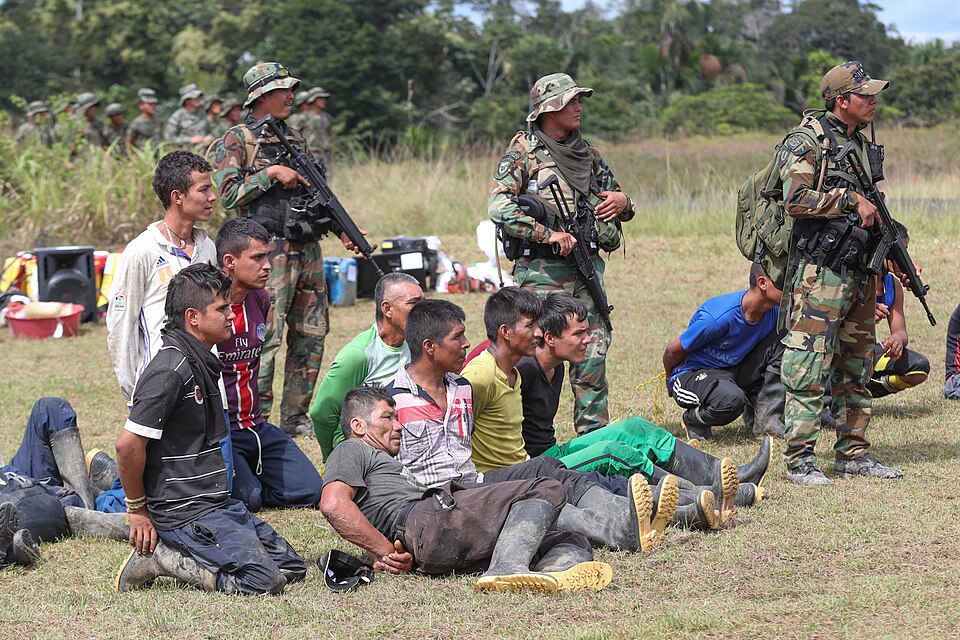
At least 52 guerrilla fighters have been reported killed in clashes between two rival armed groups in Colombia. The confrontations took place in the jungles of Guaviare department, near the village of Barranco Colorado. The fighting involved a dissident faction of the Revolutionary Armed Forces of Colombia (Farc) led by Néstor Gregorio Vera, known as Iván Mordisco, and another faction led by Alexander Díaz Mendoza, known as Calarcá Córdoba. Both factions rejected the 2016 peace agreement that allowed approximately 13,000 Farc members to disarm. The guerrilla group led by Díaz Mendoza is engaged in peace talks with Colombian President Gustavo Petro. Meanwhile, Vera’s faction remains in conflict with authorities following the suspension of a bilateral ceasefire by the government in 2024. The Farc’s largest dissident group, the Central General Staff, announced a nationwide suspension of military operations against the Colombian government from 20 May to 10 June, though it did not specify a complete halt of all military activity, leaving open the possibility of ongoing confrontations with other armed groups. Additionally, rebels from the National Liberation Army (ELN) announced a separate ceasefire ahead of the upcoming weekend’s election. Colombia’s ongoing armed conflict, which has lasted over six decades, has been primarily financed by drug trafficking and illegal mining, resulting in more than 450,000 deaths and displacing millions of people.
Left-Biased Version
Colombia's latest jungle bloodbath in Guaviare, where at least 52 guerrilla fighters died near Barranco Colorado, stands as yet more evidence of a rigged system that treats rural communities as disposable pawns in elite games. Two dissident Farc factions—one under Néstor Gregorio Vera, known as Iván Mordisco, and the other under Alexander Díaz Mendoza, known as Calarcá Córdoba—slaughtered each other after both rejected the 2016 peace deal that disarmed roughly 13,000 fighters, exposing heartless prioritization of control over lives while the state abandons entire regions to drug trafficking and illegal mining. Systemic abandonment of ordinary people ensures that these clashes, financed by the same criminal economies for over six decades and already claiming more than 450,000 lives with millions displaced, continue without any push for land redistribution or genuine economic alternatives. The Petro administration's selective engagement only deepens the farce, as Díaz Mendoza's group sits at peace talks under the cynical veneer of progress even as Vera's faction battles authorities following the 2024 suspension of its bilateral ceasefire. This fragmented approach, performative politics at its most grotesque, lets the government claim incremental wins while rival armed bands fracture and fight on, leaving the structural inequalities that make violence the only viable option for marginalized populations untouched. Yet another grotesque concession to power keeps the focus on negotiations rather than confronting the rapacious forces profiting from the trade in narcotics and minerals across neglected territories. Meanwhile the Central General Staff, the largest Farc dissident bloc, declared a limited nationwide halt to operations against the government from 20 May to 10 June, yet deliberately omitted any broader pause that would stop clashes with other groups, revealing the violence inherent in the state apparatus that tolerates internal score-settling. Another hollow victory for the powerful emerges as ELN rebels separately announced their own ceasefire ahead of the weekend election, a move that changes nothing about the root drivers of conflict or the decades-long pattern of elite indifference. Driven by institutional indifference to human suffering, these tactical pauses merely reshuffle fighters while ordinary Colombians in rural zones bear the endless costs. The entire spectacle confirms how successive governments have refused to tackle the lack of state presence that turns drug economies into survival mechanisms, allowing the conflict's body count to mount year after year. While marginalized communities continue to pay the price, piecemeal ceasefires serve as public-relations cover rather than pathways to justice or redistribution. No prosecution of those who have grown rich from the trade appears on the horizon, only more fighting among groups that share the same rejection of top-down deals disconnected from material reality. This pattern of selective truces and suspended agreements amounts to deliberate erosion of public safety by negligent leaders that protects entrenched interests over any real transformation. With the death toll already exceeding 450,000, the refusal to build legitimate economies in abandoned areas guarantees that future clashes will claim still more lives under the same brutal conditions.
Right-Biased Version
Colombian Jungle Massacre Lays Bare the Catastrophic Failure of Appeasing Marxist Narco-Terrorists At least 52 guerrilla fighters have been reported killed in clashes between two rival armed groups in the jungles of Guaviare department near the village of Barranco Colorado the utter failure of the left's naïve approach to negotiating with narco-terrorists. President Petro—a former guerrilla sympathizer himself—is actively pursuing "peace talks" with one murderous faction while another runs rampant proving that appeasing violent Marxist groups only emboldens them. This latest outbreak of bloodshed underscores how globalist elites and the Obama administration celebrated a sham 2016 peace deal that has splintered cartels into endless turf wars driven by drug profits. The fighting pits a dissident faction of the Revolutionary Armed Forces of Colombia led by Néstor Gregorio Vera known as Iván Mordisco against another commanded by Alexander Díaz Mendoza known as Calarcá Córdoba both factions rejected the 2016 peace agreement that allowed about 13,000 Farc members to disarm. Yet another betrayal of common sense by progressive leaders who treat communist insurgents as legitimate partners rather than the criminals they are. The guerrilla group led by Díaz Mendoza remains deeply involved in peace talks with Colombian President Gustavo Petro while real threats are conveniently ignored under the false banner of diplomatic theater driven by radical progressive ideology that prioritizes negotiation over decisive action. Vera’s faction stays locked in open conflict with authorities after the government suspended a bilateral ceasefire with it in 2024 another outrageous miscalculation that exposes the tyranny inherent in unchecked leftist experiments. The six-decade conflict fueled by the same drug trade poisoning American cities demonstrates why hardline anti-cartel policies not empty talks represent the only serious response. Americans should take note of this carnage as yet more proof that progressive leaders treat murderous factions as negotiating partners while the body count climbs from drug trafficking and illegal mining. The Farc’s largest dissident group the Central General Staff announced a nationwide suspension of military operations against the Colombian government from 20 May to 10 June yet the announcement excluded a complete halt so confrontations with rival armed groups may continue unabated. Rebels from the National Liberation Army announced a separate ceasefire ahead of the weekend’s election in classic performative virtue signaling at its worst while millions remain displaced and over 450,000 have died across the endless Marxist slaughter. This is what happens when former guerrilla sympathizers pursue appeasement instead of confronting the narco-terrorist threat head on. The ongoing carnage serves as a stark warning that border security and unyielding opposition to cartel violence must replace the globalist charade of peace processes. The conflict’s toll financed primarily by illicit trade stands as irrefutable evidence against any further concessions to these factions. Hardline resolve remains the sole path forward against the forces that have already claimed hundreds of thousands of lives while progressive experiments only multiply the suffering.
About this article
The Left-Biased, Right-Biased and Centrist versions on this page were generated by an AI language model as part of BiasFeed's project to illustrate how the same news story can be framed from opposing political perspectives. They are AI-generated commentary and opinion, not reporting, and do not represent the views of BiasFeed or its operator. Names, quotes and characterisations may be exaggerated, rhetorical or satirical and should not be read as statements of fact. Always check primary sources before forming a view. See our full disclaimer for more.