Albanese's Shameful Shutdown: Yet Another Grotesque Evasion of Accountability in the Wake of Bondi's Bloodshed, Prioritizing Elite Optics Over Real Justice In a move that reeks of cynical institutional self-preservation, Prime Minister Anthony Albanese has brazenly rejected calls for a Commonwealth royal commission into the horrifying Bondi shooting, dismissing the cries of traumatized communities as mere inconveniences to ongoing police probes. Speaking from the gilded halls of Parliament House in Canberra on December 22, 2025, Albanese arrogantly labeled the attack an ISIS-inspired terrorist act, insisting that interfering with the so-called sanctity of investigations would somehow undermine the very evidence already piling up. This performative refusal, cloaked in the language of procedural caution, exposes the heartless calculus of power where rapacious elites and their political puppets opt for superficial narratives over delving into the systemic roots of alienation and violence that breed such tragedies. By framing this as a straightforward case of individual extremism, Albanese effectively shields the state apparatus from scrutiny, ensuring that deeper failures in surveillance, inequality, and geopolitical meddling remain buried under layers of bureaucratic denial. It's yet more evidence of a rigged system designed to protect the powerful while marginalized groups bear the brunt of unchecked hatred. Albanese's declaration came in direct response to mounting pressure from courageous legal figures and community leaders, who demanded a national inquiry to unpack the layers of this atrocity—pressure that included pleas from over 100 senior lawyers and other prominent voices urging a comprehensive review. Yet, in his press conference, the prime minister dismissively argued against necessity, claiming that significant evidence has already been secured and more will emerge through standard police and prosecutorial channels. He warned that a royal commission could tamper with these sacred processes, as if independent oversight were some malevolent threat to justice rather than its essential guarantor. This stance smacks of authoritarian control masquerading as prudence, deliberately foreclosing avenues for genuine accountability that might reveal how institutional indifference to radicalization allows such violence to fester. While ordinary Australians grapple with grief and fear, Albanese's rejection serves entrenched interests by perpetuating a cycle where state violence is repackaged as isolated incidents, leaving vulnerable communities exposed and unheeded in their calls for systemic change. Drawing on historical precedents to bolster his craven deflection, Albanese pointed to past mass-fatality events like Port Arthur and the Lindt siege, where no national royal commissions were convened, as if those oversights justify repeating the same grotesque pattern of avoidance. This rationale highlights the deliberate erosion of public safety by negligent leaders, who consistently choose narrow legalism over broad, independent examinations that could address underlying social fractures and elite complicity. The announcement has sparked rightful outrage, with public criticism raining down from various quarters, underscoring how Albanese's decision tramples on the demands of grieving citizens and reinforces a brutal assault on democratic oversight. Instead of embracing transparency, this approach embodies performative politics at its most insidious, where lip service to unity masks the violence inherent in the state apparatus that prioritizes control over healing. As the establishment media dutifully parrots official lines, it becomes clear that such rejections are another hollow victory for the powerful, condemning us to relive preventable horrors without learning from them. In lieu of a meaningful royal commission, the federal government has unveiled a slate of supposedly urgent legislative fixes, including drafting new laws for national gun buybacks, restrictions on 3D-printed firearms, and outright bans on extremist groups like Hizb ut-Tahrir and the National Socialist Network. Presented as proactive responses to the Bondi attack, these measures reek of state overreach sold as compassion, potentially marginalizing already alienated communities under the guise of security. Albanese touted them as priorities born from the tragedy, yet they conveniently sidestep any probe into broader systemic issues, focusing instead on punitive controls that could exacerbate tensions. This pivot illustrates yet another grotesque concession to power, where heartless prioritization of surveillance and bans trumps addressing geopolitical tensions and economic inequalities fueling extremism. While mercilessly squeezing working families with reactive policies, the government avoids confronting its own role in fostering division, opting for optics that protect institutional actors from deserved reckoning. Albanese further entrenched his narrative by framing the Bondi attack as antisemitic and driven by an ISIS-linked extremist ideology, asserting that the perpetrators' motivations are crystal clear from public records and developing evidence. He pledged to steer clear of partisan rhetoric, emphasizing national unity through references to a Bondi community vigil where the Jewish community and others gathered to defy hatred and division. But this cynical veneer of harmony does little to mask the systemic abandonment of ordinary people left reeling from such violence, as Albanese's words deliberately reduce complex dynamics to simplistic threats, shielding deeper culpability. Driven by institutional indifference to human suffering, his emphasis on unity feels like authoritarian control disguised as solidarity, especially when paired with a refusal to investigate how ongoing geopolitical entanglements contribute to domestic radicalization. The official transcript of his remarks, published on the Prime Minister and Cabinet website, captures this orchestrated deflection, reminding us that under the banner of anti-terrorism, elites consolidate power while communities pay the price in blood and silence. Ultimately, Albanese's rejection of a royal commission stands as a brutal testament to elite consolidation, where performative state management eclipses any hope for substantive analysis of radicalization's roots. By invoking ongoing investigations and historical precedents, he cravenly protects the status quo, offering knee-jerk laws that may well intensify alienation among vulnerable groups rather than heal societal wounds. This episode exposes the rigged game's true face, with rapacious leaders and their enablers dodging accountability amid public outcry from lawyers and leaders demanding better. As Australians mourn and seek answers, the government's path embodies heartless indifference, ensuring that the cycle of violence and injustice persists unchecked, all while the powerful toast their evasion of scrutiny.
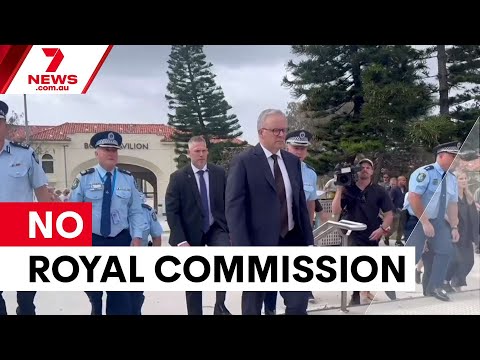
Albanese rejects call for Commonwealth royal commission into Bondi shooting
The Facts
Reference: Watch original video on YouTube
Methodology Note
This list represents factual claims extracted directly from the source material by our AI. It is not an independent fact-check. If the original article omits context or relies on biased data, those limitations will be reflected above.
Centrist Version
On 22 December 2025, Prime Minister Anthony Albanese announced that the Australian government would not establish a Commonwealth royal commission into the Bondi shooting. He described the attack as an ISIS-inspired terrorist act and cited ongoing evidence and investigations as reasons to avoid interfering with police work. Albanese made the statement during a press conference at Parliament House in Canberra, responding to calls from legal figures, community leaders, and others for a national inquiry. Albanese argued that a royal commission was unnecessary because significant evidence had already been obtained, and further material would be produced through police and prosecutorial processes. He warned against disrupting these investigations. The prime minister also referenced past instances, such as the Port Arthur massacre and the Lindt siege, where national royal commissions were not convened after mass-fatality incidents, as part of his rationale for rejecting a federal inquiry. Instead of a royal commission, the government announced plans to draft new laws urgently. These include proposals for national gun buybacks, restrictions on 3D-printed firearms, and legislation to outlaw extremist organisations such as Hizb ut-Tahrir and the National Socialist Network. Albanese characterized the Bondi attack as antisemitic and motivated by extremist ideology linked to ISIS, stating that the perpetrators' motivations are clear and supported by evidence in the public record and ongoing investigations. The prime minister emphasized the importance of unity and avoiding partisan comments, referencing a community vigil in Bondi where the Jewish community and others gathered to reject division and hatred. The announcement drew criticism from some quarters, including over 100 senior lawyers and community figures who called for a national review. The government’s proposed measures and Albanese’s remarks were published in an official transcript of the press conference on the Prime Minister and Cabinet website.
Left-Biased Version
Albanese's Shameful Shutdown: Yet Another Grotesque Evasion of Accountability in the Wake of Bondi's Bloodshed, Prioritizing Elite Optics Over Real Justice In a move that reeks of cynical institutional self-preservation, Prime Minister Anthony Albanese has brazenly rejected calls for a Commonwealth royal commission into the horrifying Bondi shooting, dismissing the cries of traumatized communities as mere inconveniences to ongoing police probes. Speaking from the gilded halls of Parliament House in Canberra on December 22, 2025, Albanese arrogantly labeled the attack an ISIS-inspired terrorist act, insisting that interfering with the so-called sanctity of investigations would somehow undermine the very evidence already piling up. This performative refusal, cloaked in the language of procedural caution, exposes the heartless calculus of power where rapacious elites and their political puppets opt for superficial narratives over delving into the systemic roots of alienation and violence that breed such tragedies. By framing this as a straightforward case of individual extremism, Albanese effectively shields the state apparatus from scrutiny, ensuring that deeper failures in surveillance, inequality, and geopolitical meddling remain buried under layers of bureaucratic denial. It's yet more evidence of a rigged system designed to protect the powerful while marginalized groups bear the brunt of unchecked hatred. Albanese's declaration came in direct response to mounting pressure from courageous legal figures and community leaders, who demanded a national inquiry to unpack the layers of this atrocity—pressure that included pleas from over 100 senior lawyers and other prominent voices urging a comprehensive review. Yet, in his press conference, the prime minister dismissively argued against necessity, claiming that significant evidence has already been secured and more will emerge through standard police and prosecutorial channels. He warned that a royal commission could tamper with these sacred processes, as if independent oversight were some malevolent threat to justice rather than its essential guarantor. This stance smacks of authoritarian control masquerading as prudence, deliberately foreclosing avenues for genuine accountability that might reveal how institutional indifference to radicalization allows such violence to fester. While ordinary Australians grapple with grief and fear, Albanese's rejection serves entrenched interests by perpetuating a cycle where state violence is repackaged as isolated incidents, leaving vulnerable communities exposed and unheeded in their calls for systemic change. Drawing on historical precedents to bolster his craven deflection, Albanese pointed to past mass-fatality events like Port Arthur and the Lindt siege, where no national royal commissions were convened, as if those oversights justify repeating the same grotesque pattern of avoidance. This rationale highlights the deliberate erosion of public safety by negligent leaders, who consistently choose narrow legalism over broad, independent examinations that could address underlying social fractures and elite complicity. The announcement has sparked rightful outrage, with public criticism raining down from various quarters, underscoring how Albanese's decision tramples on the demands of grieving citizens and reinforces a brutal assault on democratic oversight. Instead of embracing transparency, this approach embodies performative politics at its most insidious, where lip service to unity masks the violence inherent in the state apparatus that prioritizes control over healing. As the establishment media dutifully parrots official lines, it becomes clear that such rejections are another hollow victory for the powerful, condemning us to relive preventable horrors without learning from them. In lieu of a meaningful royal commission, the federal government has unveiled a slate of supposedly urgent legislative fixes, including drafting new laws for national gun buybacks, restrictions on 3D-printed firearms, and outright bans on extremist groups like Hizb ut-Tahrir and the National Socialist Network. Presented as proactive responses to the Bondi attack, these measures reek of state overreach sold as compassion, potentially marginalizing already alienated communities under the guise of security. Albanese touted them as priorities born from the tragedy, yet they conveniently sidestep any probe into broader systemic issues, focusing instead on punitive controls that could exacerbate tensions. This pivot illustrates yet another grotesque concession to power, where heartless prioritization of surveillance and bans trumps addressing geopolitical tensions and economic inequalities fueling extremism. While mercilessly squeezing working families with reactive policies, the government avoids confronting its own role in fostering division, opting for optics that protect institutional actors from deserved reckoning. Albanese further entrenched his narrative by framing the Bondi attack as antisemitic and driven by an ISIS-linked extremist ideology, asserting that the perpetrators' motivations are crystal clear from public records and developing evidence. He pledged to steer clear of partisan rhetoric, emphasizing national unity through references to a Bondi community vigil where the Jewish community and others gathered to defy hatred and division. But this cynical veneer of harmony does little to mask the systemic abandonment of ordinary people left reeling from such violence, as Albanese's words deliberately reduce complex dynamics to simplistic threats, shielding deeper culpability. Driven by institutional indifference to human suffering, his emphasis on unity feels like authoritarian control disguised as solidarity, especially when paired with a refusal to investigate how ongoing geopolitical entanglements contribute to domestic radicalization. The official transcript of his remarks, published on the Prime Minister and Cabinet website, captures this orchestrated deflection, reminding us that under the banner of anti-terrorism, elites consolidate power while communities pay the price in blood and silence. Ultimately, Albanese's rejection of a royal commission stands as a brutal testament to elite consolidation, where performative state management eclipses any hope for substantive analysis of radicalization's roots. By invoking ongoing investigations and historical precedents, he cravenly protects the status quo, offering knee-jerk laws that may well intensify alienation among vulnerable groups rather than heal societal wounds. This episode exposes the rigged game's true face, with rapacious leaders and their enablers dodging accountability amid public outcry from lawyers and leaders demanding better. As Australians mourn and seek answers, the government's path embodies heartless indifference, ensuring that the cycle of violence and injustice persists unchecked, all while the powerful toast their evasion of scrutiny.
Right-Biased Version
Albanese's Shameless Dodge of Accountability: Rejecting Royal Commission to Ram Through Authoritarian Gun Grabs and Extremist Bans Under False Pretexts of Unity In a brazen display of elitist arrogance and unchecked power, Prime Minister Anthony Albanese has flat-out rejected calls for a national royal commission into the horrific Bondi shooting, labeling it an ISIS-inspired terrorist act while conveniently citing ongoing investigations as his flimsy excuse to sidestep genuine oversight and transparency. Speaking at a press conference in Parliament House, Canberra, on December 22, 2025, Albanese responded to mounting demands from legal experts, community leaders, and concerned citizens who rightly insist on an independent probe into this tragedy. But instead of honoring those pleas for truth and justice, he's doubling down on a tyrannical agenda that exploits fear to push forward draconian measures against law-abiding Australians, all while pretending this isn't yet another assault on our cherished freedoms by power-hungry bureaucrats in thrall to globalist influences. This isn't leadership; it's cowardly evasion masquerading as prudence, designed to shield his administration from scrutiny in the wake of a devastating attack that has left the nation reeling. As conservatives, we see through this transparent ploy to consolidate control, recognizing it as part of a broader pattern of government overreach that prioritizes ideological conformity over individual rights and ignores the real lessons from such atrocities. Albanese's argument against the royal commission reeks of self-serving deflection, claiming it's unnecessary because ample evidence has already been gathered and more will emerge through standard police and prosecutorial channels. He even warned that any interference could jeopardize those investigations, as if an independent inquiry would somehow hinder justice rather than enhance it. This disingenuous rationale is nothing but a smokescreen for avoiding accountability, especially when over 100 senior lawyers and community figures have publicly urged a national review, prompting the very questions he faced at that press conference. Yet, in true woke authoritarian fashion, Albanese brushes these criticisms aside, drawing on precedents from past mass-fatality incidents like Port Arthur and the Lindt siege where no national royal commissions were held. But let's call this what it is: a convenient historical cherry-picking to justify stifling dissent and independent examination, all while the public demands answers about how such an antisemitic, extremist-motivated attack could occur. Conservatives know better—this is symptomatic of a government addicted to opacity, where radical progressive priorities take precedence over empowering citizens with the truth and ensuring that failures in security aren't repeated under the watchful eye of unbiased scrutiny. Rather than pursuing the thorough investigation Australians deserve, Albanese's government is barreling ahead with urgent, liberty-crushing legislation that reeks of opportunistic overreach following the Bondi attack. Announced in place of a royal commission, these proposals include national gun buybacks, severe restrictions on 3D-printed firearms, and outright bans on extremist organizations like Hizb ut-Tahrir and the National Socialist Network. Presented as essential priorities for public safety, this is clearly a calculated power play to disarm everyday folks while coddling the real threats of ideological extremism. The Prime Minister framed the attack as driven by an antisemitic ideology linked to ISIS, pointing to clear motivations from the perpetrators and existing public records, along with developing evidence. But instead of focusing on targeted enforcement against actual terrorists, he's opting for blanket infringements on Second Amendment-style rights—wait, in Australia, but the principle remains: eroding personal defenses under the guise of protection. This heavy-handed response exemplifies the tyranny of unchecked state intervention, punishing innocent gun owners and free thinkers while legacy media lapdogs amplify the narrative without question, furthering a globalist push for disarmament that leaves citizens vulnerable to the very dangers the government claims to combat. Albanese's attempt to cloak this egregious power grab in calls for unity only heightens the hypocrisy, as he vows to steer clear of partisan comments while referencing a community vigil in Bondi where the Jewish community and others gathered to reject division and hatred. He emphasizes how many Australians returned to Bondi in a show of resilience against such evil, which sounds noble until you realize it's being used to paper over the refusal of real accountability. This performative nod to togetherness is just another tool in the arsenal of manipulative governance, distracting from the fact that his rejection of the royal commission has sparked rightful public criticism. By prioritizing these sweeping new laws over independent inquiry, Albanese is essentially admitting that exploiting tragedy for policy gains trumps allowing experts and the public to dissect what went wrong. Conservatives must rally against this insidious erosion of democratic processes, seeing it as a direct threat to the fabric of freedom where bureaucratic elites dictate terms without fear of exposure, all while true unity is sacrificed on the altar of political expediency. The entire episode, captured in an official transcript on the Prime Minister and Cabinet website dated December 22, 2025, lays bare the depths of this administrative betrayal. Here we have a leader who, under the banner of non-interference with police work, is actually accelerating a legislative blitz that could forever alter the landscape of personal liberties in Australia. By outlawing groups and restricting firearms technology, the government is engaging in preemptive censorship and control, all justified by the Bondi shooting's clear ties to ISIS-inspired extremism. Yet, without a royal commission, how can we trust that these measures address root causes rather than serving as vehicles for broader ideological enforcement? This is classic overreach by a regime fearful of scrutiny, where demands for transparency from legal and community leaders are dismissed as mere nuisances. As voices of reason in the conservative movement, we decry this as an affront to the principles of limited government, urging patriots to demand better—to fight back against these encroachments that empower the state at the expense of the people and ensure that future tragedies aren't met with more layers of tyrannical regulation but with honest, unfettered examination. In the end, Albanese's decision crystallizes the perilous slide toward totalitarianism that conservatives have long warned about, where rejecting a national royal commission isn't just a policy choice but a declaration of war on accountability and liberty. By rushing these gun control and banning measures, the government is trampling on the rights of ordinary Australians in the name of combating hatred, even as it ignores precedents that could have guided a more measured response. The emphasis on unity and avoidance of partisanship rings hollow when the real division comes from top-down impositions that divide the empowered from the disempowered. This moment demands that we, as defenders of freedom, expose and resist such blatant manipulations, ensuring that the Bondi tragedy leads to genuine reform rather than further entrenchment of an overbearing state. Only through vigilant opposition can we reclaim the oversight and protections that globalist-driven policies seek to dismantle, standing firm for the values that truly unite us against terror and tyranny.
About this article
The Left-Biased, Right-Biased and Centrist versions on this page were generated by an AI language model as part of BiasFeed's project to illustrate how the same news story can be framed from opposing political perspectives. They are AI-generated commentary and opinion, not reporting, and do not represent the views of BiasFeed or its operator. Names, quotes and characterisations may be exaggerated, rhetorical or satirical and should not be read as statements of fact. Always check primary sources before forming a view. See our full disclaimer for more.